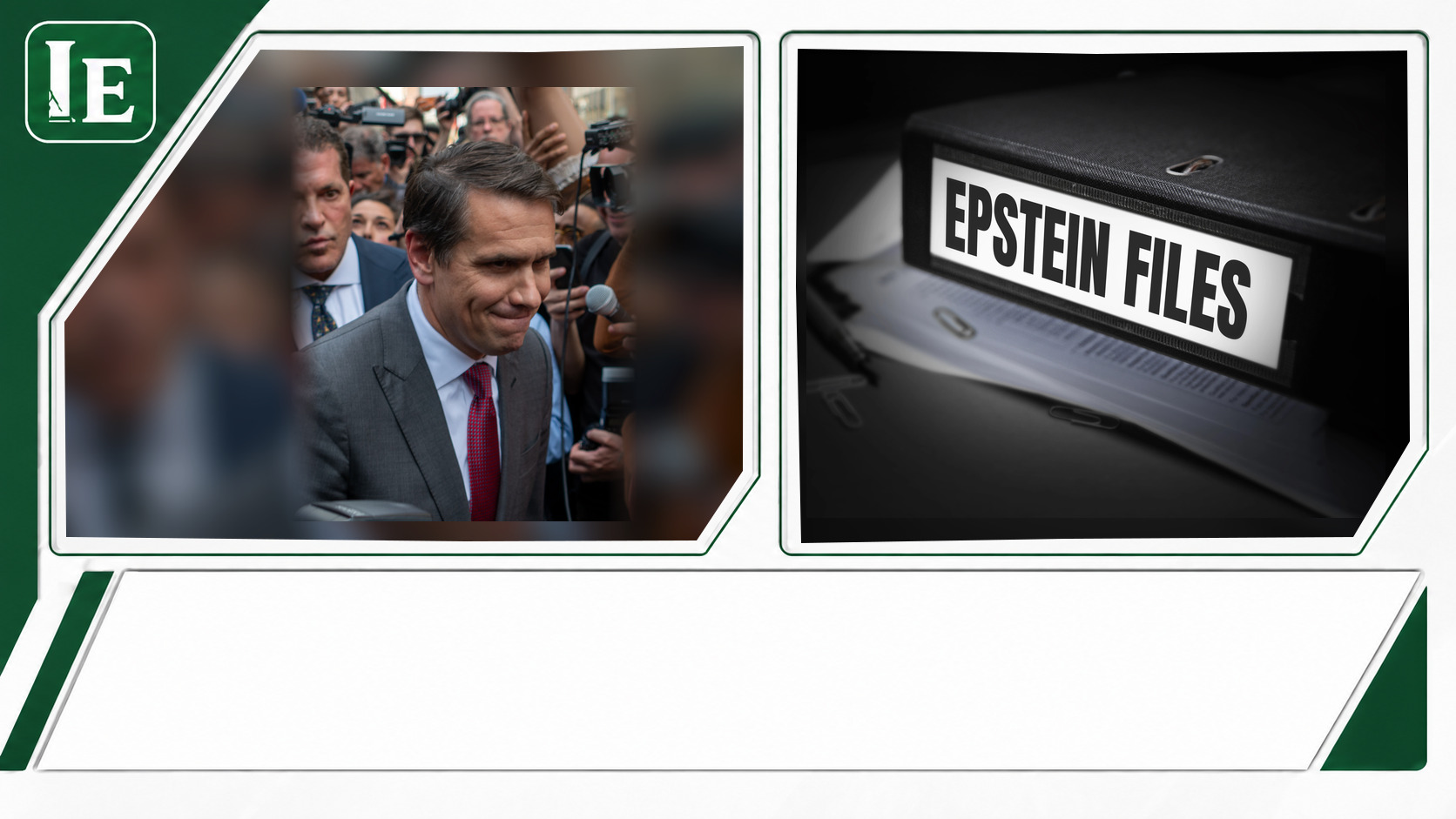
Blanche’s remarks put a longstanding Justice Department norm under fresh scrutiny: how much distance should separate the White House from federal investigations and prosecutions? The answer matters because the department’s decisions can shape individual cases, public trust and the limits of presidential influence.
Todd Blanche refused to pledge that the U.S. Department of Justice would remain independent from the White House, saying he would take President Donald Trump’s views into account when directing federal law enforcement. The attorney general’s position matters because it raises a basic question about whether prosecutorial decisions will be insulated from a president’s political interests.
Blanche did not describe a specific case or order from Trump. But declining to make that commitment shifts attention from any one investigation to the broader relationship between the Justice Department, President Donald Trump and the White House.
Blanche rejected a clear firewall
The immediate issue is straightforward. Asked whether the Justice Department would operate independently, Blanche said he was not prepared to make that pledge, according to reporting by The Washington Post.
He also said Trump’s views would factor into how he directs federal law enforcement. That is a notably different posture from an assurance that the department will make charging, investigative and enforcement decisions without White House input.
Those two ideas can coexist in an administration only with careful boundaries. The president sets broad executive-branch priorities, appoints senior officials and is politically accountable for the administration. Yet the Justice Department has traditionally treated particular investigations and prosecutions as areas requiring professional distance from political officials.
Blanche’s remarks leave the public without a clear description of where he would draw that line. Taking a president’s views into account could mean considering broad policy objectives, but it could also invite concerns about influence over individual law-enforcement decisions. The available reporting does not spell out which interpretation Blanche intended.
Why DOJ independence is different
The Justice Department is part of the executive branch, not a separate branch of government. Its leaders are appointed by the president, and an attorney general is expected to carry out lawful administration policy.
“Independence,” in this setting, does not usually mean that the department has no connection to the president. It refers to a practical and ethical expectation that prosecutors and investigators should not use government power to reward allies, punish critics or resolve political disputes.
That distinction is especially important because federal law enforcement has unusually direct power over people and institutions. The department can investigate alleged crimes, bring federal charges, seek warrants and supervise agencies such as the FBI. Decisions that appear politically directed can damage confidence even when officials argue they are acting within their authority.
Supporters of a more president-centered approach may argue that voters elect a president to set policy and should expect senior appointees to follow that agenda. Critics counter that criminal enforcement cannot be treated like ordinary policy because the stakes include liberty, due process and equal treatment under the law.
Confirmation fight adds context
Blanche’s position has already been a point of contention on Capitol Hill. Sen. Chris Coons, a Delaware Democrat, said he pressed Blanche during his Senate Judiciary Committee confirmation hearing on whether he would stand up to Trump and act independently on behalf of the American people.
In a statement released by Coons’s office, the senator described Blanche as Trump’s former personal attorney and said Blanche had been serving as acting attorney general while seeking confirmation to lead the department permanently. Coons framed the hearing as a test of whether Blanche could maintain sufficient separation from the president.
The senator also made wide-ranging criticisms of the department’s recent direction, including allegations involving political enemies, personnel decisions and grants. Those are Coons’s allegations and political arguments, not findings established by the material available here.
Still, the exchange illustrates why Blanche’s answer is drawing attention. Confirmation hearings often focus on credentials and policy views. In this case, the central dispute is about institutional restraint: whether the attorney general sees resistance to presidential pressure as part of the job.
The question is implementation
No report cited here identifies a particular federal case in which Blanche acted on Trump’s wishes. Nor does Blanche’s refusal to offer a blanket pledge, on its own, establish that the Justice Department will make improper decisions.
The more consequential evidence will come from conduct: contacts between White House officials and Justice Department leaders, written policies governing those contacts, personnel decisions, public explanations for major cases and the department’s treatment of matters involving political figures.
Past norms have often relied as much on judgment and internal practice as on a single enforceable rule. That can make them durable when officials respect them, but vulnerable when leaders openly question their value or define them narrowly.
For career prosecutors and agents, the stakes are practical. They need clarity about whether case decisions will be judged on evidence and law, or on whether outcomes align with the preferences of politically appointed leaders.
Public trust is the larger test
Blanche may argue that listening to the president is consistent with serving in an executive administration. His critics will see his refusal to promise independence as confirmation that the White House could have an improper role in law-enforcement choices.
Both sides are arguing over more than phrasing. They are debating whether the Justice Department should operate primarily as an instrument of a president’s agenda or as a law-enforcement institution with special safeguards against political direction.
The answer will not be settled by one interview response. But Blanche’s unwillingness to pledge independence gives Congress, department employees and the public a clear standard by which to assess the decisions that follow.
For now, the key unresolved issue is not whether a president may set broad priorities. It is whether the Justice Department’s most sensitive decisions will retain enough distance from the White House to command confidence across political lines.
Leave a Reply