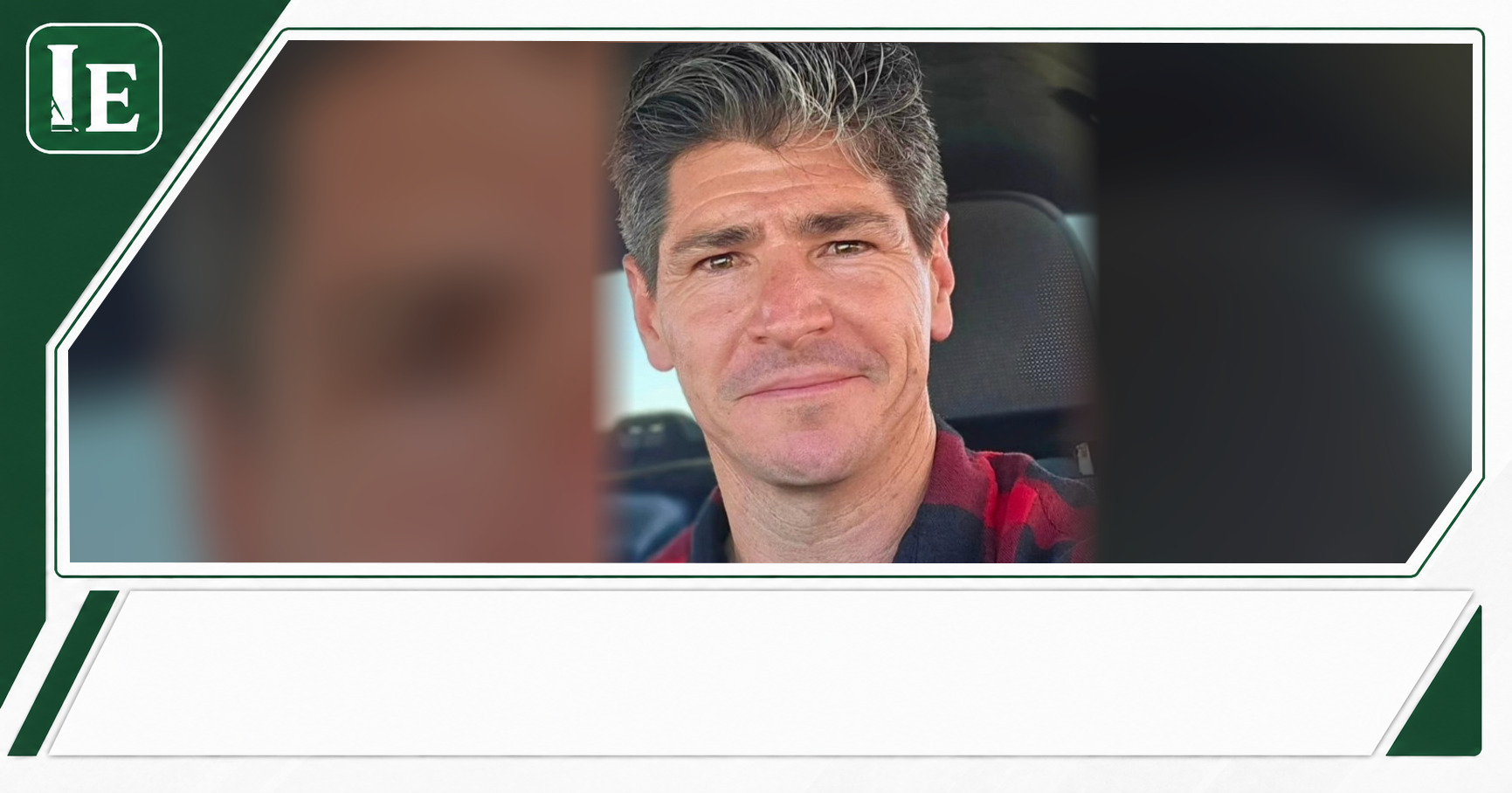
Eight years after ABC canceled the Roseanne revival, Michael Fishman says he is still confronting social-media claims that Roseanne Barr was treated unfairly. His response centers on the difference between free expression and excusing harm.
Michael Fishman responded bluntly to fans defending Roseanne Barr, criticizing people who still excuse Barr’s racist tweet and dispute the 2018 cancellation of the Roseanne reboot. In an Instagram Reels video posted Aug. 10, Fishman said ABC was right to cancel the sitcom in May 2018, arguing that attempts to frame the tweet as harmless comedy erase the damage it caused.
For Fishman, who played D.J. Conner in the franchise, the issue is not ancient television gossip. He says social-media users continue to send him messages defending Barr and recasting the cancellation as a political overreaction—eight years after ABC made its decision.
Fishman pushes back after years
Fishman’s sharpest message was aimed at commenters who treat Barr’s tweet as a routine joke that should not have cost her the revival. He said he has received inaccurate comments about the controversy for years and had usually chosen not to engage.
That approach, he said, no longer felt sufficient. In the video, Fishman described defenses of Barr as the continued spread of a false narrative and said that using politics to excuse dehumanizing language does not change what happened.
His point is direct: a performer’s intent, or a supporter’s view of comedy, does not automatically settle whether a remark is harmful. Fishman’s frustration appears to be with the repeated insistence that the public must reinterpret the incident as censorship rather than reckon with the content of the tweet itself.
The tweet behind ABC’s decision
ABC canceled the highly rated Roseanne revival in May 2018, hours after Barr posted a racist message about Valerie Jarrett, a Black former senior adviser to President Barack Obama. The post compared Jarrett to an offspring of the Muslim Brotherhood and Planet of the Apes.
Barr deleted the tweet and apologized, calling it a “bad joke.” ABC Entertainment President Channing Dungey called the post “abhorrent, repugnant and inconsistent with our values” in announcing the cancellation.
The speed of ABC’s action turned the situation into a broader argument about accountability, speech and the obligations of major entertainment companies. Those arguments have not disappeared, particularly as Barr’s supporters continue to say the network acted unfairly.
Fishman’s video does not resolve that larger cultural disagreement. It does establish where one person directly affected by the decision stands: he rejects the premise that the tweet should be minimized as ordinary comic material.
A cast member lived the fallout
Fishman’s perspective carries a different weight from that of an online observer because the cancellation reshaped his workplace and a franchise he had been part of since childhood. He played D.J. Conner on the original Roseanne and returned for the revival.
ABC later rebuilt the series without Barr as The Conners. Fishman returned with John Goodman, Laurie Metcalf and Sara Gilbert, while Barr’s title character was written out and died before the spinoff’s first episode.
The new series ultimately ran for seven seasons and ended in 2025. Its existence showed that the Conner family, the cast and the crew could continue without the star whose name had defined the original show.
It also meant that the people involved could not simply leave the 2018 controversy behind. Fishman’s comments suggest the show’s continuation did not end questions, criticism or hostile messages directed at cast members associated with the decision to move on.
Why the debate keeps resurfacing
Celebrity controversies often outlast the events that triggered them because they become shorthand for bigger political and cultural fights. In this case, some critics of ABC’s decision see the cancellation as evidence that entertainment companies punish speech too quickly.
Others point to the specific racist comparison at issue and argue that a network had both the right and the responsibility to draw a line. Fishman falls clearly in that second camp, saying there was “no joke, only damage.”
There is a meaningful distinction between debating the consequences of a public statement and denying the nature of the statement itself. Fishman’s objection is primarily to the latter: the claim that the tweet was innocuous and that its backlash was invented by “woke” culture.
That distinction helps explain why the exchange remains emotionally charged. Supporters may focus on whether the punishment fit the offense; Fishman is focused on what he sees as a refusal to acknowledge the offense at all.
Accountability is not a finished story
Fishman’s response is unlikely to end the online arguments around Barr, whose career and public comments have continued to draw scrutiny and support from sharply divided audiences. But it offers a reminder that a network cancellation is not the only consequence of a televised controversy.
Cast members, crew and fans can be left defending their own choices and experiences for years. For Fishman, that has included responding to people who treat the cancellation as a grievance rather than a decision tied to a specific racist post.
The unresolved question is not whether everyone will agree with ABC’s 2018 call. They plainly do not. The clearer takeaway from Fishman’s video is that those closest to the show may have little patience for efforts to rewrite why the revival ended in the first place.
His message is blunt because, after eight years, he says the underlying facts should no longer be in dispute.
Leave a Reply