
The online claim has outpaced the available evidence. Here is the documented record surrounding Cunningham, the Indiana Fever and demonstrations tied to the debate over transgender athletes in women’s sports.
Sophie Cunningham was linked to an unverified rumor as demonstrations continued at recent Indiana Fever games, but the available reporting does not establish the claim’s details or a direct connection to the team controversy. The documented story is narrower: Cunningham’s comments about transgender participation in women’s sports prompted rallies in Seattle and Portland, while an online allegation lacks credible proof.
That distinction matters because confirmed events surrounding the Indiana Fever have created a setting where unsupported claims can appear more solid than they are. The record includes protests, a courtside exchange, WNBA discipline and Cunningham’s own comments—not verification of a separate new allegation.
The claim has no supporting record
The trend item describing a “new Sophie Cunningham rumor” does not identify a specific allegation, provide source documents or offer independently verifiable evidence. Without those elements, there is no basis to present the claim as confirmed news.
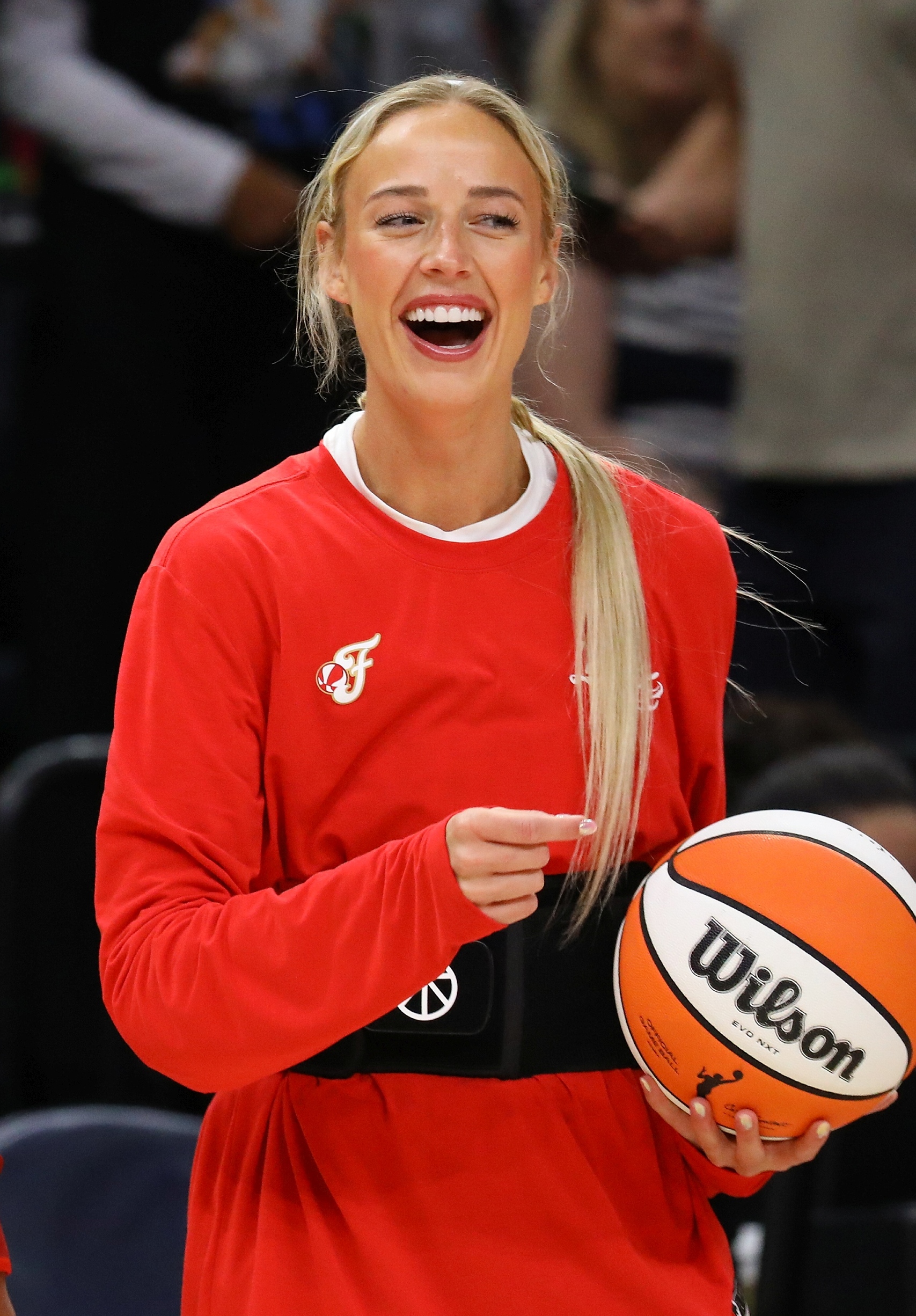
Available reporting also does not show that the rumor grew directly out of the Seattle incident, the protests, or an action by Cunningham, the Fever or the WNBA. It remains an unsupported online claim rather than a documented development.
That does not erase the controversy around Cunningham. It means the established facts and the additional rumor need to be treated separately.
Rallies followed Cunningham’s comments
Associated Press reporting published Aug. 1 described rallies outside recent Fever games in Seattle and Portland supporting Cunningham and her recent comments about transgender athletes. The demonstrations were real, even if the broader claims circulating online have not been substantiated.
Cunningham told the AP she was not concerned that the attention would become a distraction for Indiana. She said her focus was to do her job and play basketball, adding that she would not “hide” or “dim” herself because some people disagreed with her views.
She also said she had “honestly had nothing to do” with the demonstrations. Cunningham characterized the rallies as supporters exercising free-speech rights, not an effort she organized or directed.
The AP reported that the events drew roughly two dozen participants, as well as onlookers. At the Portland game, some fans waved transgender flags and booed when Cunningham entered the court.
Seattle exchange brought league discipline
The most clearly documented flashpoint occurred around a Fever game in Seattle. Two Cunningham supporters were seated courtside holding signs, and an exchange involving them later resulted in discipline for Seattle Storm co-owner Celeste Keaton.
According to the AP, the WNBA fined Keaton an undisclosed amount and suspended her for five games. The Seattle Storm later apologized and said it remained committed to a welcoming and respectful environment for everyone attending games.
The Storm did not publicly detail the exchange. That limit is important: the confirmed outcome is league discipline and a team apology, not every interpretation that has been attached to the incident online.
The Seattle episode became part of a larger stretch of scrutiny around Cunningham and the Fever. But the existence of a documented incident does not validate a separate claim that has not been supported with evidence.
A policy fight reached the arena
The rallies centered on the contentious debate over transgender participation in girls’ and women’s sports. Cunningham’s supporters have framed restrictions as a matter of fairness and protections for female athletes.
Opponents take a different view, arguing that excluding transgender athletes causes harm and that broad political conflicts are being carried into venues where players and fans should be able to participate respectfully. The competing perspectives have turned Fever games into a visible forum for a debate that extends beyond basketball.
The Fever are not the decision-makers on statewide policy or the wider rules governing youth sports. Still, Cunningham’s public stance and the team’s national profile have made Indiana games a focal point for supporters and critics.
That context helps explain why the protests drew attention. It does not supply evidence for the separate rumor involving Cunningham.
Indiana tried to keep basketball central
Fever coach Stephanie White said she was frustrated that the conversation was being pulled away from basketball. At the same time, she described the moment as part of the WNBA’s growth and said the league needed to manage it, protect players where possible and lead with conversation.
For the Fever, the challenge is practical as well as public-facing. The team cannot fully control outside demonstrations, social-media reactions or political associations connected to individual players. It can set expectations for conduct, safety and focus within its own organization.
Indiana continued to win during the stretch covered by the AP report. The Fever beat the Portland Fire 112-98 for their fifth straight victory, with Cunningham scoring 13 points.
Caitlin Clark had 26 points, 10 rebounds and 10 assists in that game for her fourth career triple-double. Those on-court results show the team continued competing while the surrounding debate commanded attention.
What remains unresolved
The central unanswered issue is not complicated: the supplied material does not say precisely what the new rumor alleges, nor does it provide evidence that would substantiate it. It also does not show a response from Cunningham, the Fever or the WNBA to a newly alleged development.
What can be confirmed is more limited but still significant. Cunningham made public comments that became a flashpoint; supporters rallied outside Fever games; a Seattle courtside exchange led to WNBA discipline for Keaton; and the Storm apologized afterward.
Everything beyond that requires a higher standard than repetition online. On-the-record statements, official documentation or reliable independent reporting would be needed before an undefined allegation could move from rumor to verified news.
For now, the clearest account is that an active public debate has followed Cunningham and the Fever, while the separate rumor remains unverified.
Leave a Reply