Blog

  • BBC Seeks Trump’s Sealed Jan. 6 Privilege Defeats for Libel Defense

    BBC Seeks Trump’s Sealed Jan. 6 Privilege Defeats for Libel Defense

    A discovery fight in Washington, D.C., could shape what evidence the BBC can use in Trump’s Florida libel case. The dispute centers on whether prior Jan. 6 privilege rulings can be used to challenge Trump’s current objections.

    The BBC is seeking to unseal rulings on Donald Trump’s privilege claims in Washington, D.C., arguing that sealed Trump Privilege Rulings from Jack Smith’s Jan. 6 probe could affect its libel defense and potentially “Could Decide His Libel Suit.”

    In a Wednesday filing, the broadcaster asked Chief U.S. District Judge James Boasberg to unseal more rulings rejecting Trump’s executive privilege claims. The dispute involves discovery in Trump’s libel suit, and the BBC says Jan. 6 evidence could matter to the case outcome.

    A sealed record meets libel law

    The fight is not over whether Jack Smith’s former criminal investigation should be reopened in this case. It is about whether decisions made during that investigation can help determine what evidence the BBC may obtain now that Trump has sued the broadcaster.

    Aerial view of White House and downtown, Washington, D.C LCCN2010630891
    Image: Carol M. Highsmith, via Wikimedia Commons, Public domain.

    Trump’s defamation lawsuit targets the BBC documentary Trump: A Second Chance, which he says misleadingly edited his Jan. 6 speech. According to the case record described in the filing, Trump alleges the program wrongly suggested that he made a direct call for violent action on Jan. 6, 2021.

    The BBC’s response turns on a practical point: by suing over how his speech and Jan. 6 were portrayed, Trump put the meaning and impact of that speech into dispute. The broadcaster argues that it needs access to evidence from related witnesses and events to defend itself.

    That is where the sealed Executive Privilege Decisions enter the case. The BBC says Boasberg previously rejected Trump’s executive privilege assertions during Smith’s grand jury probe, and that those rulings remain largely under seal.

    What the BBC wants opened

    The broadcaster is asking Boasberg to further unseal the decisions so it can see whether Trump is raising privilege objections that have already failed in a closely related context. The BBC says the rulings could help it respond to Trump’s current privilege claims, obtain evidence and defend itself effectively.

    Its fairness argument is direct. Trump chose to file a libel case over a Jan. 6 portrayal, the BBC says, but he is also invoking executive privilege to keep evidence out of reach from witnesses who could speak to the same subject.

    The filing says the unsealed decisions will “likely be crucial” to obtaining information that could be dispositive of Trump’s lawsuit. That wording does not mean the BBC has won the discovery dispute. It means the broadcaster is telling the court that access to the sealed privilege record may determine what evidence it can use.

    In other words, the fight is procedural, but the stakes are substantive. A sealed ruling from a grand jury matter could shape the evidence available in a media defendant’s civil libel defense.

    Trump says discovery goes too far

    Trump’s side has described the BBC’s discovery requests as excessive and impermissibly broad, according to the court record cited in the filing. His position is that the Florida defamation case should not become a full-scale relitigation of Jan. 6.

    That concern has already received some support. A magistrate judge agreed that the entire Jan. 6 record is not at issue in the Florida case and instead focused on other discovery, including Trump’s financial records.

    That matters because it limits the shape of the dispute. The BBC is not being given an open-ended license to examine every aspect of Jan. 6 through civil discovery. Courts often narrow discovery when requests sweep too widely, even when the requesting party argues the material could be useful.

    The BBC is now seeking a narrower route. Rather than demanding every Jan. 6 document, it is asking a D.C. judge to unseal prior privilege rulings so it can understand and contest Trump’s effort to withhold specific evidence.

    The Pence lawyer example

    One concrete flashpoint involves Greg Jacob, a lawyer for former Vice President Mike Pence. The BBC says Trump has impeded its efforts to obtain evidence by directing Jacob not to produce potentially responsive documents.

    According to the filing, the White House directed Jacob not to produce materials because they were subject to a potential assertion of executive privilege. For the BBC, that example illustrates why the sealed rulings matter.

    If Boasberg already rejected similar privilege claims, the broadcaster argues, it should not have to fight those objections without seeing the earlier decisions. The BBC’s position is that prior rulings may show the limits of Trump’s ability to block access to the same kinds of evidence now.

    Executive privilege protects certain confidential presidential communications, but it is not absolute. Courts can reject privilege claims when competing legal needs outweigh them, and the issue becomes especially complicated when a former or sitting president is personally litigating a separate civil case.

    Why Jack Smith still matters

    Smith is no longer the center of this civil dispute, but his Jan. 6 grand jury probe created the sealed record now at issue. The BBC’s request depends on what Boasberg decided when Trump raised executive privilege claims in that earlier fight.

    That makes the Washington, D.C., proceeding unusually important to Trump’s Florida defamation case. If the court unseals more of the privilege decisions, the BBC may gain a stronger basis to seek evidence that Trump says should remain protected.

    For Trump, the stakes are not only about confidentiality. Defamation plaintiffs often must prove that challenged statements were false and caused harm. Depending on the claims and defenses, evidence about Jan. 6, public perception and alleged damages could become central.

    The BBC is arguing that the sealed privilege rulings may unlock evidence relevant to those issues. Trump’s lawyers are arguing, in effect, that the BBC is trying to expand the case beyond the alleged editing of the documentary.

    What Boasberg must decide

    Boasberg now has to decide how much, if any, of the sealed privilege decisions should be made public or made available for use in the BBC’s defense. The court could unseal more material, keep most of it protected or allow a narrower disclosure.

    The ruling will not necessarily decide Trump’s libel lawsuit by itself. But it could shape the evidence available to the BBC, which is why the broadcaster frames the discovery issue as potentially dispositive.

    The unresolved question is narrower than the politics around Jan. 6, but it carries significant legal weight: when Trump sues over a media portrayal of that day, how much sealed government evidence can the defendant reach?

    The answer could determine whether the case remains focused mainly on a television edit or widens into a fight over what Trump said, what he intended and what witnesses already told investigators.

  • Trump Recusal Advice Becomes Todd Blanche’s Attorney General Confirmation Test

    Trump Recusal Advice Becomes Todd Blanche’s Attorney General Confirmation Test

    The fight is less about one accusation than about whether the Justice Department can show its ethics rules still have force when Trump’s former lawyer is nominated to lead it.

    Todd Blanche’s attorney general nomination is facing a fight over recusal advice related to Donald Trump, after a former Trump White House lawyer said Blanche disqualified himself. The dispute is over whether Blanche can oversee Justice Department matters involving Trump personally, a question now following the nomination into the Senate.

    Senate Democrats are pressing the Justice Department for answers as Blanche’s nomination moves forward. Their inquiry puts reported ethics guidance, Blanche’s past work as Trump’s defense lawyer and DOJ’s handling of Trump-related matters at the center of the confirmation fight.

    The conflict question comes first

    The core issue is not simply that Blanche once represented Trump. It is whether that relationship should limit his role inside DOJ when the department handles matters that could affect Trump in his personal capacity.

    Todd Blanche (54817708751)
    Image: Gage Skidmore, via Openverse, by-sa.

    That distinction matters because not every case touching a president raises the same ethics concerns. Trump acting as president, Trump as a former private client, and Trump as someone seeking money or legal relief from the federal government can present different questions.

    Critics argue Blanche’s former attorney-client relationship creates a conflict when DOJ matters could personally benefit Trump. Supporters could counter that prior representation does not automatically bar an official from every matter involving a president or former client.

    For the Senate, that makes the recusal advice central. The confirmation fight is no longer only about Blanche’s qualifications. It is also about whether lawmakers and the public can understand what limits, if any, DOJ ethics officials placed on his role.

    Schiff’s inquiry targets DOJ guidance

    A May 2026 statement from Sen. Adam Schiff’s office said Schiff was leading an inquiry into reports that Blanche had been advised by DOJ ethics lawyers to recuse from cases involving Trump in his personal capacity.

    According to Schiff’s office, the inquiry was directed to Jolene Ann Lauria, the Justice Department’s designated agency ethics official and a senior career official. The senators sought details about what advice Blanche received and whether he followed it.

    The release said reports indicated Blanche, a former Trump defense lawyer, was advised early in his DOJ tenure to step aside from legal cases involving Trump personally. Schiff and other senators also asked about Blanche’s involvement with Trump lawsuits against government agencies seeking personal payouts.

    The Democratic senators described the matter sharply, saying Blanche appeared to have ignored ethics and legal advice. They called the alleged misconduct extreme and linked it to Trump’s efforts to obtain personal financial compensation from taxpayer money. That remains an allegation from Democratic senators, not a final DOJ finding.

    One promise now looms large

    Blanche’s critics are also using his own confirmation testimony as part of their argument. Schiff’s office quoted Blanche as saying during his 2025 confirmation process: “I will follow the rules as told to me by the experts, career prosecutors in the department, if it comes to ever recusing.”

    That statement is important because it gives critics a benchmark. If DOJ ethics officials told Blanche to recuse from Trump-related personal matters, they argue his earlier promise required him to follow that advice.

    There is still room for dispute over the premise. DOJ could say the advice was narrower than described, that public reports leave out key context, or that internal ethics guidance is more nuanced than the political debate suggests.

    Senate Judiciary Committee records also show Blanche’s nomination drew written questions for the record in 2025. That indicates senators were already focused on his obligations before the current controversy over recusal advice intensified.

    The White House raised the stakes

    The White House nomination notice was brief but significant. On June 8, 2026, the White House said Todd Blanche, of Florida, was being sent to the Senate to be attorney general.

    That move changes the practical weight of the ethics dispute. A lower-ranking DOJ official can, at least in theory, be screened off from particular matters. An attorney general is harder to separate from the department’s most sensitive decisions because the office is the public face of DOJ independence.

    For Trump’s allies, Blanche’s earlier representation of Trump may be viewed as evidence of trust, legal skill and experience under pressure. For critics, the same fact is exactly why he should not supervise matters where Trump has a personal stake.

    The nomination therefore turns a reported internal ethics issue into a broader confirmation test. Senators are being asked not only whether Blanche can lead the Justice Department, but whether DOJ can credibly police boundaries involving the president’s personal interests.

    What Blanche could argue

    There is a possible defense for Blanche, even if critics reject it. Government ethics rules often depend on the specific matter, the parties involved, the time period, the nature of the former representation and whether the official has a personal or financial interest.

    Under that view, not every Trump-related issue would necessarily be off-limits. Some matters may involve federal policy or the presidency rather than Trump as a private client.

    Blanche could argue that he is able to follow ethics guidance, that reported advice has been mischaracterized, or that the matters at issue do not fall within the category critics describe. DOJ could also decline to reveal some internal ethics consultations or argue that the guidance cannot be reduced to a simple public summary.

    That is why Schiff’s request for details matters. The strongest version of the ethics case depends on specifics: which matters were covered, what advice was given, who gave it, whether it was mandatory or advisory, and whether Blanche participated after receiving it.

    The unanswered questions remain

    The public record does not show that a court has formally removed Blanche from a case. The claim that he “disqualified himself” is best understood as a serious political and ethics allegation, not an established legal outcome.

    The largest unknown is whether DOJ will provide Congress with the recusal guidance Blanche allegedly received. If the department refuses, the dispute could shift from an ethics review into another fight over oversight, transparency and executive privilege.

    It is also unclear whether any court, inspector general or internal DOJ office will examine Blanche’s actions. A Senate inquiry can create pressure and produce public documents, but it does not by itself remove an official from a matter.

    For now, the controversy follows Blanche because the White House has chosen him for attorney general. The unresolved question is whether DOJ can convincingly handle cases involving Trump’s personal interests when the nominee to lead the department once represented him.

  • Nancy Mace’s Caucus Ban Targets CBC—and Could Sweep In Others

    Nancy Mace’s Caucus Ban Targets CBC—and Could Sweep In Others

    The South Carolina Republican frames the measure as anti-discrimination. Critics and supporters are likely to clash over whether identity-based caucuses represent communities or divide Congress by race.

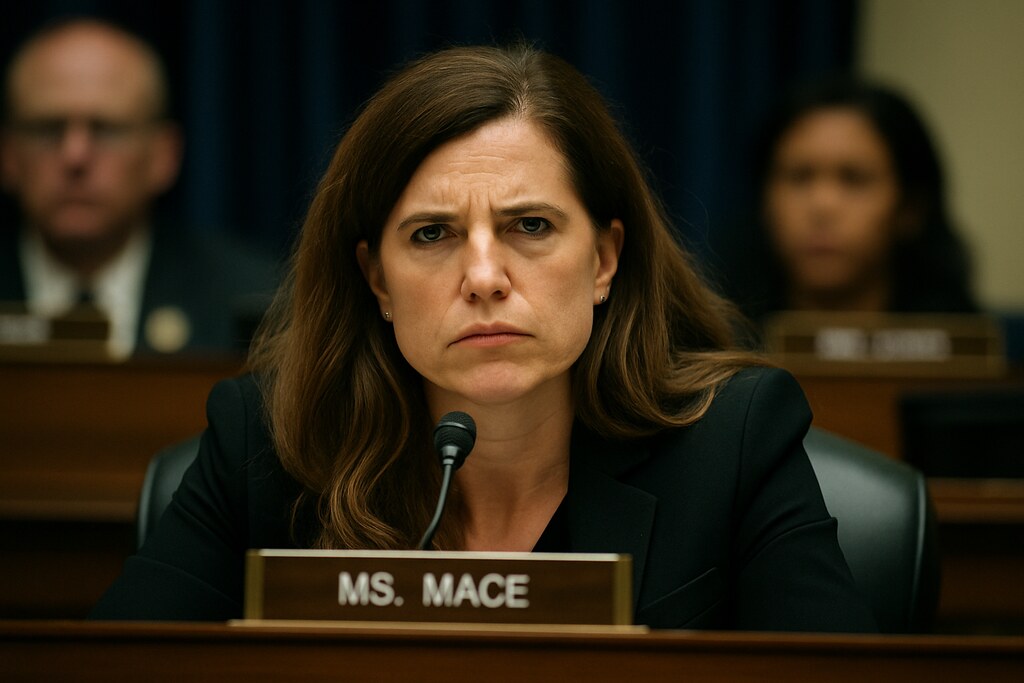
    Nancy Mace introduced a House resolution Thursday to bar race-based caucuses in Congress, a measure that targets the Congressional Black Caucus and could affect other identity-based caucuses. Mace says the caucuses amount to discrimination, arguing that Congress should not recognize groups organized around race, ethnicity or national origin.

    The proposal puts House Republicans in a politically charged fight over race, representation and DEI, with steep odds of passage and possible consequences beyond the Congressional Black Caucus. The question now is whether the measure becomes a serious rules fight or a campaign-season marker.

    A ban aimed at Capitol Hill

    Rep. Nancy Mace of South Carolina is seeking to dissolve the Congressional Black Caucus through a House resolution that would prohibit race-based caucuses, according to Fox News Digital, which first reported the proposal.

    High rise view of Capitol Hill at night, looking east from Pine and 9th
    Image: Dllu, via Wikimedia Commons, CC BY-SA 4.0.

    The measure is not limited to the CBC. As described in the report, it would apply to House caucuses organized around race, ethnicity or national origin, meaning it could also force changes or dissolution for the Congressional Hispanic Caucus and the Congressional Asian Pacific American Caucus.

    That wider reach is central to the politics of the proposal. Mace is not only objecting to one prominent Democratic-aligned caucus; she is challenging the broader idea that Congress should allow identity-based organizing within its own walls.

    Mace’s argument is anti-DEI

    Mace has framed the resolution as an anti-discrimination measure. “Race-based caucuses are not diversity. They are federally sanctioned segregation,” she said in a statement to Fox News Digital.

    She also said it was time to end what she called “taxpayer-funded discrimination” inside Congress.

    That language places the proposal inside the larger Republican campaign against diversity, equity and inclusion policies. In her final months in Congress, Mace has also rolled out measures targeting DEI, transgender participation in women’s sports and birthright citizenship, according to the Fox report.

    The new resolution brings that fight inward. Rather than focusing on universities, schools, agencies or private institutions, it asks whether lawmakers’ own caucuses should be judged under the same anti-DEI arguments Republicans have advanced elsewhere.

    What caucuses do and don’t do

    Congressional caucuses are not standing committees. They do not have the same formal power to write legislation through committee jurisdiction or control hearings.

    They are coalitions. Lawmakers form them around many kinds of shared interests, including policy priorities, geography, ideology, industry and identity.

    Supporters of groups such as the Congressional Black Caucus generally see them as tools for lawmakers to coordinate on issues affecting communities they represent. Those priorities can include voting rights, economic opportunity, health disparities, education and criminal justice.

    Mace’s case is different. Her argument is that the structure itself is discriminatory if Congress maintains or recognizes groups organized around racial or ethnic identity, regardless of the stated policy purpose.

    The rule could cut both ways

    The Congressional Black Caucus is the most visible target of the resolution, but the wording could sweep in other groups if the House tried to enforce it broadly.

    Fox reported that the measure could reach GOP-affiliated organizations as well, including the Black Republican Congressional Staff Association, the GOP Latino Staff Association and the Republican Asian American Staff Association.

    That creates a political complication for Republicans. A narrow rule could be seen as targeted at Democratic-aligned groups. A broad rule could threaten identity-based organizations connected to Republicans, too.

    The unresolved issue is where the House would draw the line across a large ecosystem of member-led caucuses, staff groups and informal coalitions with different roles and levels of official recognition.

    Why passage looks unlikely

    Even in a Republican-controlled House, the resolution faces steep political odds. Fox News Digital reported it would likely meet universal opposition from Democrats and resistance from some Republicans.

    A vote to dissolve or ban the Congressional Black Caucus would be a major political escalation, especially months before an election in which control of the House is at stake.

    It would also force Republican members to take a public position on whether race- and ethnicity-based caucuses should be treated as discrimination. That is a sharper vote than a general statement against DEI.

    House Minority Leader Hakeem Jeffries, a New York Democrat and member of the Congressional Black Caucus, adds another layer to the politics. If Democrats win the House, Jeffries could become the first Black speaker.

    What happens next

    The immediate question is procedural: whether Mace seeks a chamber-wide vote, whether House GOP leadership gives the resolution momentum and whether any Republicans publicly oppose it.

    There is also a calendar problem. Fox reported that Mace is leaving office in January, narrowing the window for the proposal to move from message to rule change.

    The initial report said Fox News Digital reached out to the Congressional Black Caucus, the Congressional Hispanic Caucus and the Congressional Asian Pacific American Caucus for comment. Without those responses in the public record, the debate so far is led by Mace’s argument and the political consequences it could trigger.

    If the resolution stalls, it could still matter as a statement of direction for Republicans fighting DEI. If it advances, Congress would face a difficult internal question: whether it can ban caucuses organized around identity without disrupting the informal networks that have long helped shape power on Capitol Hill.

  • Fox Viewers Threaten Boycott After The Five Becomes a ‘Hard Watch’

    Fox Viewers Threaten Boycott After The Five Becomes a ‘Hard Watch’

    The backlash shows how quickly a panel built for ideological combat can frustrate its own audience when immigration enforcement, tone and personality collide on air.

    Fox News viewers criticized The Five after an ICE-related exchange this week, and some said they would boycott Fox News or the show. The backlash centered on a clash between Greg Gutfeld and Jessica Tarlov, which turned a routine cable-news argument into a flash point for viewers already frustrated by ICE coverage.

    Reaction reported by the Daily Express US after a clip circulated on X showed how quickly the panel’s familiar back-and-forth can sour when immigration enforcement enters the discussion. For some Fox viewers, the exchange was not just another on-air disagreement but a “hard watch” that pushed them to say enough was enough.

    A panel fight overtook ICE

    According to the Daily Express US account, the segment featured Greg Gutfeld, Jessica Tarlov, Jesse Watters, Dana Perino and Emily Compagno. The panel moved through multiple political topics before the conversation turned to controversy around ICE.

    The discussion included President Donald Trump’s ICE crackdown, alleged violence tied to the wider immigration debate and the way political opponents describe one another. The subject was immigration enforcement, but the argument quickly widened into a fight over rhetoric and responsibility.

    Gutfeld gave a lengthy argument connecting political demonization with violence. He said both sides can avoid debate, but his emphasis was on progressive leaders who, in his view, treat opponents as evil rather than engage with ideas.

    His comments stretched beyond ICE to the border, crime, transgender issues, college speakers and accusations involving Israel and Trump. Tarlov then pushed back, referencing polling and raising the ICE-related cases of Renee Good and Alex Pretti, according to the Express report.

    Viewers aimed anger at Tarlov

    The online criticism cited in the report was not only about immigration policy. Much of it focused on Tarlov’s presence on the panel and how viewers felt her exchange with Gutfeld changed the episode’s rhythm.

    One viewer wrote on X that they tried to watch but could not make it through the episode, saying Tarlov’s voice gave them “high blood pressure.” Another said Tarlov “ruins the show” for many viewers and objected to her being scheduled for the rest of the week.

    Other complaints said viewers turned off the episode or avoided it because Tarlov was on. One post mocked her use of polling, turning the polling reference itself into part of the frustration rather than addressing the numbers.

    That is why the phrase “hard watch” is important. The posts described irritation and fatigue, not merely disagreement with one argument on ICE.

    The format depends on friction

    The tension is built into The Five. The show’s appeal comes from a panel that does not speak in one voice, even though its core audience is strongly associated with Fox News’ conservative opinion programming.

    Tarlov’s role is often to challenge the dominant conservative framing at the table. For some viewers, that makes the discussion more complete. For others, especially during a charged segment about ICE, that dissent can feel like disruption rather than balance.

    That leaves the show in a narrow lane. Too little disagreement can make a panel predictable. Too much, or the wrong kind of pushback for the audience, can make the argument feel exhausting.

    The backlash suggests some loyal viewers want debate within certain boundaries. They may welcome a challenge that sharpens the conservative case, but reject one that appears to interrupt the show’s usual pace.

    ICE raised the temperature

    Immigration enforcement is one of the most volatile subjects in cable news. ICE coverage can fold together border security, local crime, federal power, deportation policy, protest and the treatment of migrants in a single segment.

    That helps explain why the segment moved from ICE into a broader dispute about violence and political speech. Gutfeld’s point, as quoted by the Express, was that refusing to debate opponents can leave “only” violence.

    Tarlov’s response moved in a different direction, using polling and specific ICE-related cases. Those are two separate styles of argument: one broad and cultural, the other tied to public opinion and incidents.

    On a panel show, those approaches can miss each other fast. To one part of the audience, pushback can look like accountability. To another, it can look like derailing the point.

    X posts are not the audience

    The backlash was visible, but the available reporting does not show a mass rejection of Fox News or The Five. The cited complaints came from viewers responding online after the clip was shared on X.

    Social media often highlights the sharpest reactions because anger is easier to quote and circulate than mild approval. A cluster of posts can reflect a real mood without proving what the full audience thinks.

    Still, repeated complaints can be a useful signal for a network, especially when they focus on the same personality, the same panel dynamic and the same viewer behavior: turning the show off or threatening to stop watching.

    There was no indication in the available report that Fox News or The Five announced any programming change in response. The report also did not include a public response from Tarlov, Gutfeld or the network addressing the criticism.

    The pressure is on the formula

    The immediate story is straightforward: some Fox News viewers blasted The Five after an ICE discussion and threatened to boycott. The larger issue is how opinion shows keep loyal viewers engaged when the product itself is conflict.

    The Five’s strength is its ability to turn political fights into a fast-moving table argument. Its weakness is that the argument can become more about the person making the point than the issue being discussed.

    That appears to be what happened here. ICE supplied the spark, Gutfeld set a broad frame about rhetoric and violence, Tarlov challenged the argument, and viewers on X turned the exchange into a complaint about the show.

    Whether the anger fades after one episode or becomes part of a larger frustration depends on what Fox does next and whether viewers who say they are done actually stay away. For now, the episode shows that even an audience that tunes in for combat can decide the fight has gone too far.

  • Susan Collins Presses Hegseth Over Two Dozen-Plus Officer Ousters

    Susan Collins Presses Hegseth Over Two Dozen-Plus Officer Ousters

    The Maine Republican’s criticism adds bipartisan pressure for the Pentagon to explain leadership changes affecting senior officers, promotions and assignments.

    Susan Collins criticized Pete Hegseth over the removal of more than two dozen senior military officers on Tuesday, and the criticism came during a Senate appropriations hearing. As chair of the Senate Appropriations Committee, Collins put the Pentagon leadership changes under sharper congressional scrutiny.

    The issue is not only who Hegseth has removed since taking over at the Pentagon. It is whether Congress will demand faster explanations when senior officers are fired, sidelined or blocked from advancement.

    A funding chair raises the stakes

    Collins’s rebuke carried weight because of where she delivered it. An appropriations hearing is not just a place for speeches; it is one of Congress’s main levers over federal agencies, including the Defense Department.

    Sen Susan Collins official
    Image: United States Senate, via Wikimedia Commons, Public domain.

    In her opening statement, Collins called the removals deeply troubling. She argued that the personnel moves could damage military leadership, discourage qualified service members and weaken trust in the Pentagon’s senior ranks.

    That makes the dispute larger than a personnel-management fight. Collins is a senior Republican with direct influence over defense spending, and her criticism signals that questions about Hegseth’s decisions are not coming only from Democrats.

    The officers at the center

    According to The Hill, Collins described the dismissed officers as “men and women who volunteered to serve our country and swore an oath to support and defend our Constitution.”

    She also highlighted the February 2025 firing of Adm. Lisa Franchetti, the first woman to lead the Navy. The broader record she pointed to included removed senior officers, blocked promotions across three service branches and interventions in several senior officers’ assignments.

    Coverage of the upheaval has also cited former Army chief of staff Gen. Randy George and Gen. Chris Donahue, the commander of U.S. Army Europe and Africa. These are posts tied to readiness, planning, operations, alliances and the internal culture of the armed services.

    Replacing senior commanders can be within a defense secretary’s authority. Collins’s concern, as described in the available reporting, centers on the scale, pace and lack of public explanation for the moves.

    Meritocracy becomes the flashpoint

    Collins also cited news reports that women and people of color were disproportionately fired or sidelined. She warned that such a pattern could discourage qualified women and people of color from joining or remaining in the armed forces.

    Her argument was not that senior officers are guaranteed to keep a command. It was that the military’s credibility depends on service members believing that advancement is based on performance rather than identity, politics or unexplained intervention.

    “The United States military is one of the greatest meritocracies in the free world,” Collins said, according to The Hill. “We need to make sure that it stays that way.”

    The available reports cited in the dispute do not include a detailed response from Hegseth to Collins’s hearing remarks. That leaves unanswered what specific performance, policy or command reasons the Pentagon believes justified each removal or blocked promotion.

    Congress eyes written explanations

    The push for answers is already moving beyond one hearing. Last month, the House Armed Services Committee adopted, without objections in a bipartisan voice vote, a provision in the annual National Defense Authorization Act that would require the Pentagon to tell Congress why senior military officers were fired or dismissed within five days.

    The provision would not prevent the Pentagon from removing senior officers. Its effect would be to force a prompt written record for Congress, making it harder for major leadership changes to occur without an explanation.

    Democrats have used sharper language. In an April statement from the House Armed Services Committee Democrats, ranking member Adam Smith said Hegseth’s “baseless firings” of Gen. Randy George and other senior officers weakened national security and amounted to “serious alarm.”

    Collins’s intervention adds a different kind of pressure. In Congress, oversight and funding authority often work together, and an appropriations chair can turn policy concerns into reporting requirements, budget conditions or direct pressure on department leaders.

    Civilian control, with guardrails

    The tension sits at the center of U.S. civil-military norms. Civilian control of the armed forces is foundational, and a defense secretary has broad authority to decide who should hold command positions.

    But that authority is politically sensitive when it is used repeatedly against senior leaders without clear public reasoning. If officers believe assignments or promotions depend on ideological alignment rather than performance, morale can suffer.

    If lawmakers believe experienced leaders are being removed without adequate justification, Congress has tools: hearings, reporting mandates, spending restrictions and pressure for testimony under oath.

    That is why Collins’s venue matters. Her comments came in a setting where concern can move from rhetoric to conditions on money or oversight language.

    Key questions still unanswered

    The immediate question is whether the scrutiny produces more transparency from the Pentagon. The House provision requiring explanations within five days still has to survive the broader defense authorization process before it becomes law.

    Several facts remain unresolved in the public record cited in this dispute:

    • Whether the Pentagon will provide detailed reasons for each senior officer removal.
    • How many blocked promotions or reassigned officers are part of the same pattern Collins described.
    • Whether women and people of color were disproportionately affected, and by what measure.
    • Whether Senate appropriators will attach funding consequences or reporting requirements to the issue.

    For now, Collins has turned a series of Pentagon personnel moves into a test of accountability. Hegseth may have the authority to replace senior military leaders, but Congress is signaling that authority does not guarantee silence.

  • Trump’s $10 Billion IRS Lawsuit Put His Own Finances Under Scrutiny

    Trump’s $10 Billion IRS Lawsuit Put His Own Finances Under Scrutiny

    The case shows a legal risk of seeking massive damages: the plaintiff may have to prove the harm with private records. It also raised questions about a president suing the federal government he led.

    Donald Trump filed a $10 billion lawsuit against the IRS over leaked tax returns, then a judge ordered Trump to turn over his financial records in the case, according to a Raw Story report syndicated by MSN. The fight matters now because it shows how a demand for huge damages can push a plaintiff’s own finances into court scrutiny.

    It also highlights the conflict-of-interest concerns raised by Trump suing the government he led: NPR reported on May 18, 2026, that a federal judge dismissed the suit after Trump asked to drop it, leaving questions about settlement talks and the Justice Department’s role.

    The lawsuit cut both ways

    Trump’s claim was built around a private injury: the leak of his tax returns. But in court, a damages claim is not just a political statement or a complaint about unfair treatment. It is something the plaintiff may have to prove.

    Sign for the Internal Revenue Service building Washington DC 2025 02 07 13 21 52 1
    Image: G. Edward Johnson, via Wikimedia Commons, CC BY 4.0.

    That is why the reported order for “all” financial records became so significant. If Trump claimed the leak caused massive harm to him, his businesses or his financial interests, the government could seek records that test the size and source of that alleged harm.

    Discovery orders do not decide the final merits of a lawsuit. They decide what evidence the parties must exchange before the court evaluates the claims. In a case involving $10 billion, that procedural step can create major pressure long before any trial.

    Why the records mattered

    The reported financial-records order turned the lawsuit into a reminder of a basic litigation rule: suing can expose the person who sues. A plaintiff who asks for extraordinary damages may have to disclose information that would otherwise remain private.

    For Trump, that carried special weight. His tax returns and business records have been the subject of years of legal battles, congressional investigations and public debate. A broad discovery demand could have pushed the case well beyond the original leak dispute.

    At the same time, the order should not be treated as a ruling that Trump’s underlying grievance was baseless. It was a procedural development in a case that, according to NPR, was later dismissed at Trump’s request.

    An unusual suit against government

    According to NPR, Trump and the Trump Organization sued the Internal Revenue Service and the Treasury Department in January, seeking $10 billion over the leak of Trump’s tax returns years earlier.

    The unusual part was not only the dollar figure. NPR described it as the first known instance of a president suing the government he leads. That put Trump in two roles at once: private plaintiff demanding money and president overseeing the executive branch whose lawyers would help determine the government’s response.

    Legal experts cited by NPR questioned parts of the claim. The leak had been attributed to a federal contractor rather than a full-time government employee, and that contractor was already serving prison time. Experts also questioned whether the statute of limitations could be an obstacle because the tax-information leaks occurred between 2018 and 2020.

    Those questions did not automatically end the case. But they help explain why the court and outside critics focused on both the evidence behind the claim and the way any resolution would be handled.

    Judge Williams pressed transparency

    U.S. District Judge Kathleen Williams presided over the case and dismissed it after Trump asked to drop it, NPR reported. She said court rules allow a plaintiff to walk away from a lawsuit.

    But Williams had already raised concerns about the case’s posture. NPR reported that she cited Trump’s own rhetoric and the possibility that he was, in effect, negotiating with himself as both plaintiff and president.

    She also criticized the Justice Department for not publicly filing settlement documents. In language quoted by NPR, Williams pointed to the government’s obligation to protect “the public’s strong interest in knowing about the conduct of its Government and expenditure of its resources” and the “fair administration of justice.”

    That concern is central to the controversy. A private lawsuit can settle quietly. A sitting president’s personal claim against federal agencies, handled by federal lawyers, carries a different public burden.

    The settlement questions widened

    After Trump asked to dismiss the case, the Department of Justice announced what NPR described as an “anti-weaponization fund” connected to the settlement framework. NPR reported that the department said the $1.7 billion fund would allow DOJ to settle and pay cases.

    That $1.7 billion figure is separate from Trump’s $10 billion demand. Still, it added another layer to the questions surrounding the case, especially for watchdogs and lawmakers concerned about how the government might resolve a president’s own claim.

    Ethics watchdogs and congressional Democrats had already sought to intervene, arguing that the public had an interest in how the dispute was handled.

    Rupa Bhattacharyya, a former Justice Department lawyer who evaluated claims against the federal government, told NPR that ordinary claims often involve matters like traffic accidents, medical malpractice or slip-and-fall injuries in federal buildings. Even in serious cases, she said, payouts almost never reached more than $10 million.

    What remains unresolved

    Edward Whelan, a conservative lawyer and former Justice Department attorney, told NPR it would make sense to pause the litigation until Trump left the White House. He called the conflict “glaring,” arguing that Trump and officials answering to him should not be deciding how the government responds to his own claims.

    The available public record leaves key points unclear. It is not clear from the reports how much, if any, financial material Trump actually produced before the lawsuit was dismissed.

    It is also unclear what final settlement terms, if any, were reached and how they relate to the Justice Department fund described by NPR. Judge Williams’ concern was not merely whether Trump could drop the case, but whether the public had enough information about how the government was resolving it.

    The narrower legal takeaway is that Trump’s $10 billion demand made his own finances potentially relevant. The broader issue is power and transparency: when a president sues the federal government while directing the executive branch, even a voluntary dismissal can leave hard questions about who negotiated, who pays and what the public is allowed to see.

  • Trump Fights to Claw Back $5.6 Million E. Jean Carroll Collected

    Trump Fights to Claw Back $5.6 Million E. Jean Carroll Collected

    The dispute is no longer about retrying Carroll’s allegations. It is about whether Trump has any remaining route to reclaim money already released from a judgment he continues to challenge.

    Donald Trump is trying to recover $5.6 million from E. Jean Carroll in the legal fight over whether Trump can claw back the money after E. Jean Carroll’s sexual abuse and defamation verdict. The dispute is playing out in federal court and at the U.S. Court of Appeals for the Second Circuit, where his side continues to challenge a judgment courts have allowed Carroll to collect.

    That makes the newest phase narrower than the trials that made the case nationally known, but still consequential. Trump denies wrongdoing and is pressing appeals; Carroll’s side says years of delay should not keep her from money a jury awarded.

    The case has shifted to money

    The latest fight is about recovery after payment. Trump’s effort centers on $5.6 million tied to the first civil verdict Carroll won against him, not on a new jury deciding her allegations from scratch.

    Richard H. Chambers United States Court of Appeals, Pasadena, California (14514432551)
    Image: Ken Lund from Reno, Nevada, USA, via Wikimedia Commons, CC BY-SA 2.0.

    That distinction matters because courts treat a paid or released judgment differently from a pending award. A party seeking to claw back funds generally needs a legal basis showing that the judgment supporting the payment has been reversed, vacated or otherwise undone.

    Trump has not secured that kind of ruling. The U.S. Supreme Court declined to disturb the civil verdict, and the 2nd Circuit refused to stop the transfer when Trump’s lawyers sought emergency relief.

    For Carroll, the shift from verdict to payment was a major procedural step. For Trump, the strategy has moved from trying to block collection to trying to unwind it after the fact.

    Why the dollar figure varies

    The public numbers around the payout have not always matched exactly. The current clawback demand is described as $5.6 million, while The Associated Press reported on July 9 that U.S. District Judge Lewis A. Kaplan allowed Carroll to collect $5.8 million from escrow.

    That $5.8 million figure reflected the initial $5 million award plus interest, according to the AP. Trump had placed the money in escrow after the 2023 verdict while he continued to challenge the judgment.

    Once the Supreme Court left the verdict in place, Kaplan cleared the way for Carroll to receive the funds. Trump’s lawyers then sought emergency relief, but Judge Eunice C. Lee of the 2nd Circuit rejected their request to stop the transfer.

    The difference between $5.6 million and $5.8 million may come down to interest, timing or accounting details. The precise amount at stake will depend on the filings and how the courts treat the funds already released.

    What the jury found

    Carroll, a writer and former advice columnist, sued Trump over an alleged encounter in a luxury Manhattan department store dressing room in 1996. She testified that a chance interaction turned into an attack.

    In the first case, a federal jury found Trump liable for sexual abuse and defamation. The jury did not find him liable for rape under the specific civil-law standard at issue, a distinction that has continued to shape later legal arguments about the verdict.

    Trump has consistently denied Carroll’s allegations. He has said he did not know her, accused her of political and financial motives, and argued that the court process has been unfair to him.

    Carroll’s lawsuit was made possible by a temporary change in New York law allowing adult survivors of sexual abuse to sue over alleged assaults from long ago. She used that window to bring her claim in federal court.

    Two sides see delay differently

    Trump’s lawyers have argued that proceedings should not move forward while he continues seeking further review. They have also described the litigation as part of a broader pattern of legal action against him by political opponents.

    Carroll’s side has argued that continued appeals should not keep postponing payment after a jury verdict and subsequent rulings. The AP reported that her lawyers told the appeals court: “It is time for this case to come to an end.” They also wrote that Carroll had waited more than three years for the verdict to be paid.

    Kaplan, who oversaw the litigation, rejected further delay when he allowed payment from escrow. In that ruling, he wrote that Trump had been stalling the case for years and that it was time for him to pay the judgment.

    The disagreement is less about the mechanics of escrow than about finality. Trump’s team frames continued litigation as necessary appellate review. Carroll’s team frames it as an effort to delay accountability after the courts repeatedly allowed the judgment to move forward.

    The larger defamation award

    The $5.6 million dispute is not the only unresolved financial issue between Trump and Carroll. In 2024, another Manhattan jury awarded Carroll $83 million in a separate defamation case involving additional statements Trump made about her.

    At that trial, Kaplan instructed jurors to accept the earlier jury’s findings and decide only what damages, if any, Trump owed for the later defamation claims. Trump has appealed that award as well.

    His lawyers have objected to restrictions on what the defense could argue, including limits that prevented Trump from relitigating whether the underlying encounter happened. Those limits are part of why the earlier verdict continues to shape the later proceedings.

    When the 2nd Circuit declined to have all its judges rehear an appeal involving the $83 million award, Circuit Judge Denny Chin wrote that Trump had repeatedly said Carroll lied for political and financial gain and had suggested she was too unattractive for him to assault. Chin said Carroll faced harassment, humiliation, death threats and fear for her safety as a result of Trump’s statements.

    What remains in play

    The central unresolved question is not whether Carroll won the first civil verdict. She did. The question is whether Trump can identify a procedural route that would require her to return money courts have already allowed her to collect.

    That is a difficult position for any losing party because courts place weight on finality, especially after a jury verdict, appellate review and a failed emergency request to block payment. Still, Trump’s lawyers are expected to continue testing the avenues available to them.

    The case now turns on legal procedure more than courtroom testimony. For readers trying to track the practical stakes, the important shift is simple: Carroll’s first judgment moved from verdict to payment, while Trump’s fight has moved into a post-payment clawback effort.

    The next rulings may not have the drama of a trial, but they will determine whether the money remains with Carroll or whether Trump can reopen the financial consequences of a verdict he continues to contest.

  • GOP’s Next Big Bill Inherits a $3.3 Trillion Deficit Estimate

    GOP’s Next Big Bill Inherits a $3.3 Trillion Deficit Estimate

    The next Republican package is not yet fully defined, but the political burden is already visible: the prior Trump-backed bill passed narrowly and came with disputed deficit and coverage estimates.

    Republicans are preparing another major legislative package, but the next fight begins with unfinished business from the last one. The earlier Trump-backed tax-and-spending package, known as the One Big Beautiful Bill Act, carried a Congressional Budget Office estimate that it could add $3.3 trillion to federal deficits over 10 years, according to the BBC. The White House disputed that forecast.

    The new target has not been fully defined in the available reporting. That uncertainty matters because the first package showed how a single large bill can combine tax policy, health programs, food assistance, defense spending and immigration enforcement into one high-stakes vote.

    What is known about the next GOP push

    The core development is that Republicans are preparing another large bill after moving Trump’s earlier agenda through Congress in a sweeping package. The next measure is being discussed before its exact policy target is fully clear.

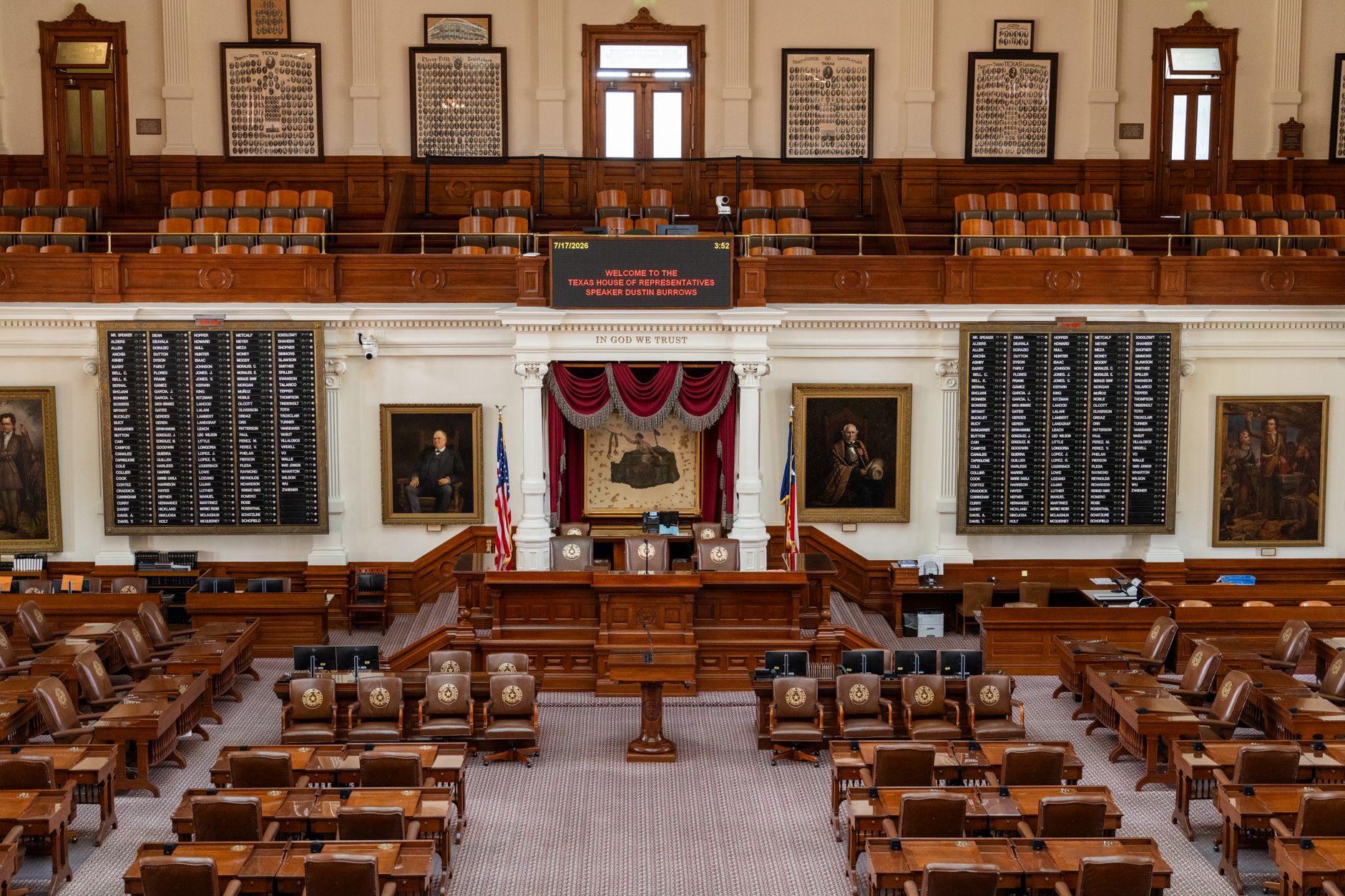
    The Texas House of Representatives chamber, featuring legislative seats and historical portraits.
    Image: Brett A, via Pexels, Pexels License.

    That gives the story a different starting point than a normal bill rollout. The question is not simply what Republicans want to pass next. It is how much of the last bill’s political weight they will carry into the next debate.

    A broad package can help party leaders combine priorities that appeal to different factions. It can also force lawmakers to take one vote on many separate issues, some of which may be easier to defend than others.

    The earlier bill passed, but the margins were tight

    The first package became a major test of Republican unity. According to the BBC, the bill cleared its final House vote after Republican holdouts eventually supported it following hours of wrangling.

    The Senate vote also showed how narrow the path was. The BBC reported that Vice President JD Vance cast the tie-breaking vote in the Senate, underscoring how little room Republican leaders had even with Republicans controlling both chambers.

    That history matters for the next bill because another sprawling measure could require many of the same lawmakers to defend another complicated vote. Fiscal conservatives, moderates, swing-district members and hard-line conservatives may each look for different assurances before backing a new package.

    The deficit and coverage estimates will shape the debate

    The Congressional Budget Office estimated that the earlier package could add $3.3 trillion to federal deficits over 10 years, according to the BBC. The White House disputed the estimate, making the figure both a fiscal marker and a political flashpoint.

    Health coverage is the other major pressure point. The CBO estimated that nearly 12 million Americans could lose health coverage by the end of the next decade as a result of changes tied to the package, the BBC reported.

    Those numbers do not define the contents of the next bill. They do define the backdrop. Supporters can argue that forecasts are uncertain and that the first bill advanced Trump’s tax, spending and enforcement priorities. Critics can point to the estimates as evidence that another large package deserves close scrutiny.

    What the One Big Beautiful Bill Act bundled

    The earlier package was broad, which is why it remains relevant to the next push. It reached across taxes, Medicaid, food assistance, defense and immigration enforcement.

    Among the major elements described by the BBC were:

    • Tax cuts: The bill aimed to make key parts of Trump’s 2017 tax cuts permanent and increase standard deductions for individuals and married couples for a limited period.
    • Medicaid changes: It added new restrictions, including work requirements for some adults and more frequent eligibility checks.
    • Provider tax limits: It lowered certain state provider taxes used to help fund Medicaid, with delayed implementation and a $50 billion rural hospital fund added after pushback.
    • Food benefits: It changed rules around the Supplemental Nutrition Assistance Program, including state cost-sharing tied to error rates and work requirements for some able-bodied enrollees.
    • Defense and immigration funding: The bill included $150 billion for the military and $100 billion for Immigration and Customs Enforcement through 2029, according to the BBC.
    • Campaign-tax promises: It included measures tied to no tax on tips and overtime, though with limits and phaseouts.

    That breadth is the strength and the risk of the strategy. A single package can carry many priorities at once, but it can also make the public debate harder to follow and the final vote harder for members to explain.

    Why the unknown target is the deciding factor

    The next bill’s policy target is the key missing piece. A measure centered on one set of priorities could unite Republicans; a measure that touches sensitive programs or regional interests could reopen the divisions that complicated the first package.

    Democrats are likely to focus on the first bill’s deficit estimate, health coverage projections and safety-net changes. Republicans are likely to argue that the earlier package delivered on campaign promises and that Democrats opposed the agenda voters backed.

    Both arguments can matter at once. A large bill can energize a party’s base while creating vulnerabilities in competitive districts. It can include tax relief, defense money and immigration enforcement funding while also raising concerns about debt and coverage.

    The practical takeaway is that the next Republican package will not arrive on a blank slate. Before its target is fully known, it is already being judged against the narrow votes, disputed estimates and policy tradeoffs attached to Trump’s One Big Beautiful Bill Act.

  • The $787.5 Million Reason Fox News Is Slowing Trump’s Election-Denial Claims

    The $787.5 Million Reason Fox News Is Slowing Trump’s Election-Denial Claims

    The network has not broken with Trump, but election-fraud narratives now sit in a different category. The question is whether that restraint holds when campaign pressure rises.

    Fox News is distancing itself from Donald Trump’s election-denial claims. The change follows the $787.5 million Dominion settlement, and the article explains why this shift matters as Trump’s election-denial rhetoric returns to campaign coverage: the claims can energize Republican voters, but for Fox News they now carry concrete legal and financial risk.

    Put plainly, Fox News pulls back from Trump’s election-denial claims in a narrow but important way. The network can still court Trump’s audience and cover his campaign aggressively while treating claims about rigged voting, stolen elections or voting-technology companies as a far more hazardous lane.

    A boundary, not a breakup

    The central mistake is to read Fox’s caution as a clean split from Trump. The relationship is more complicated than that. Fox remains a major platform in conservative politics, and Trump remains the dominant figure in the Republican Party.

    Fox News 6th 48 jeh
    Image: Jim.henderson, via Wikimedia Commons, CC0.

    The adjustment is more specific: election denial is where the network has the clearest reason to slow down. It is the portion of Trump’s politics most directly tied to the expensive defamation fight that followed the 2020 election.

    That distinction can be easy to miss for viewers. A network can be supportive of Trump on many issues, sharply critical of Democrats and still decide that certain election-fraud claims are too risky to present as fact.

    The result is not a softer Fox across the board. It is a Fox that appears more careful around one category of claims that already produced legal, financial and reputational consequences.

    The Dominion price tag

    Dominion Voting Systems sued Fox News for $1.6 billion over claims tied to the 2020 election, according to Reuters and the Associated Press. Dominion accused the network of spreading false claims that the voting-technology company helped rig the 2020 presidential election.

    The Associated Press reported in 2021 that Dominion argued Fox promoted those claims to serve its commercial interests after Trump’s loss to Joe Biden. Fox denied wrongdoing and defended its coverage.

    In the AP account of the lawsuit filing, Fox News Media said it was proud of its 2020 election coverage and would vigorously defend itself. But the case never became the courtroom victory Fox had sought.

    In April 2023, Fox agreed to pay Dominion $787.5 million to settle the defamation case shortly before opening statements were expected. The settlement did not require Fox to issue an on-air apology, but the size of the payment became a warning sign for media companies covering election-fraud allegations.

    Why election claims are different

    Political spin is one thing. Repeating unsupported factual claims about identifiable companies or people is another. That is the line the Dominion case helped clarify for newsrooms, opinion shows and cable hosts.

    Trump’s election-denial rhetoric remains politically useful to him. It can rally supporters, cast institutions as corrupt and force allies to choose sides. A fight with Fox can also keep Trump at the center of conservative attention.

    Fox’s incentives are not identical. The network may benefit from covering Trump heavily and serving an audience that is deeply invested in his politics. But it has already paid a large price for what can happen when election claims are amplified without sufficient guardrails.

    That is why the current posture matters. The network is not rejecting Trump as a political force. It is treating election-fraud narratives as a product with a liability label attached.

    Trump still gains from tension

    Trump has long used friction with media allies as part of his public performance. When he criticizes Fox, the dispute can operate as a loyalty test for viewers, hosts and Republican rivals.

    The Washington Post noted after the 2020 election that Trump’s anger at Fox did not mean the network had fully rejected his election-denial narrative. Some Fox figures pressed officials to acknowledge Biden’s win, while other parts of the network continued to give oxygen to Trump-aligned claims and grievances.

    The difference now is the settlement history. Fox knows how quickly commentary, guest claims and amplification can become evidence in a defamation dispute.

    Trump can keep raising doubts and attacking institutions. Fox, however, has a sharper reason to distinguish between reporting that Trump made a claim and treating the claim itself as established fact.

    Why Fox can sound split

    Fox coverage can appear contradictory because the network is not a single voice. News anchors, opinion hosts, guests and digital platforms can all frame Trump’s claims differently.

    That internal variety did not keep the company out of scrutiny after 2020. The Dominion fight put attention on what executives, producers and hosts understood about claims being aired.

    It also exposed a larger challenge for partisan media: audiences can reward repetition of a preferred narrative even when the evidence does not support it. After 2020, many Trump allies claimed widespread fraud.

    Election officials, courts and Trump’s own attorney general at the time, William Barr, found no evidence of fraud sufficient to change the result. The AP reported that nearly all legal challenges from Trump and his allies were dismissed, including cases rejected by the Supreme Court.

    The audience pressure remains

    Fox’s influence with Republican voters is part of why this shift matters. If a major outlet treats certain election claims more cautiously, it can affect what millions of viewers hear as plausible.

    But audience loyalty cuts both ways. If viewers want validation of Trump’s claims, Fox risks frustrating some of them by refusing to go along. If the network indulges those claims too freely, it risks another legal or reputational blow.

    That tension explains why critics and defenders may see the same posture differently. Critics may call it a correction driven by money rather than principle. Defenders may argue Fox can cover Trump’s claims as news while avoiding legally dangerous assertions.

    Both interpretations can overlap. The network can be guided by legal caution and still remain a powerful conservative media force.

    The next pressure test

    The hardest moment will not be a calm retrospective about 2020. It will be a live campaign environment with close vote counts, delayed results, partisan spin and an audience demanding certainty.

    That is when Fox’s restraint will be tested by Trump, competitors and its own viewers. Conservative media is crowded, and outlets promising fewer filters can pressure Fox if it sounds too careful.

    Still, the Dominion case changed the risk map. It attached a dollar figure to the consequences of amplifying false election claims, and it showed that private doubts inside a media company can become public evidence.

    The Fox-Trump relationship is not ending. It is being renegotiated around a subject that has already proved costly: election denial. Fox can keep courting Trump’s voters, but on those claims, it now has a powerful reason to keep its foot near the brake.

  • How One White House Sculpture Could Shape Trump’s Library Legacy

    How One White House Sculpture Could Shape Trump’s Library Legacy

    The possible move is not just about where an object is displayed. It shows how presidential libraries can turn art, gifts and White House objects into lasting public narratives.

    A White House sculpture may be transferred to a future Trump presidential library, according to a USA TODAY report published Tuesday, placing Donald Trump and the White House at the center of a larger legacy question. The article explains why that matters for Trump’s legacy: where the White House sculpture ends up could shape public memory of his presidency.

    The reported possibility sounds like a museum placement decision. It is also a fight over context, ownership and who gets to frame presidential history for visitors years from now.

    The object is the message

    The immediate issue is whether the latest White House sculpture will eventually be displayed in a future Trump presidential library. The available public summary identifies the work as a White House sculpture under consideration for that destination, but it does not confirm the title, artist, ownership status or transfer timetable.

    GLAMcamp DC 2012 National Archives building 4
    Image: Jarek Tuszyński, via Wikimedia Commons, CC BY-SA 3.0.

    Those missing details matter because a sculpture is not automatically free to follow a president into a future exhibit. Its path depends on whether it is part of the White House Collection, a loan, a gift, a personal possession or something commissioned by an outside group.

    That is why the phrase “may go to a Trump library” should be read carefully. It describes a possibility, not a completed transfer.

    Why placement carries power

    Presidential libraries are not neutral storage rooms. They are archives, museums and public-facing stages where objects help turn an administration into a story.

    Visitors may never read the full documentary record of a presidency. But they will see what gets placed at the entrance, what receives dramatic lighting, what themes repeat across galleries and which objects become visual shorthand for an era.

    That is the real significance of a White House sculpture tied to Trump. If displayed at a Trump presidential library, it could be preserved as evidence of his administration, presented as a tribute, or used to reinforce a preferred version of his public image.

    Those possibilities are not the same, and the difference depends heavily on curation.

    White House art has status

    The National Archives’ White House materials describe the executive mansion’s collection of fine and decorative arts as including historic objects associated with the White House and the presidency. In other words, the importance of an item can come from more than artistic merit.

    Where it was displayed, who used it and what moment it came to represent can all give an object meaning. Once a work is seen inside or around the White House, it can become part of the visual language of an administration.

    The Reagan Library’s National Archives blog has made a similar point in discussing Ronald Reagan’s Oval Office: presidents decorate the Oval Office, and those choices reflect values, tastes and inspiration.

    That history helps explain why a Trump-linked sculpture would draw scrutiny. A later move to a presidential library can deepen the connection between the object and the president’s chosen image.

    Ownership decides the path

    Before anyone can know whether the sculpture properly belongs in a Trump library, the institutional status of the work has to be clear.

    The Reagan Library blog offers examples showing why the category matters. A Sanford R. Gifford painting displayed during multiple administrations was returned in January 1989. A Charles Willson Peale portrait of George Washington was loaned to the White House in 1971 and later donated to the White House Collection.

    Other works, including sculptures associated with Reagan’s Oval Office, came through loans or gifts. Those precedents do not answer the Trump sculpture question, but they show why the paperwork can be as important as the artwork.

    • If the sculpture is a loan, the lender may control where it goes next.
    • If it belongs to the White House Collection, it may be part of a public collection rather than material for a president-branded museum.
    • If it is a personal gift, different rules may apply.
    • If it was commissioned by an outside group, the terms of that arrangement would matter.

    The legacy argument cuts both ways

    Supporters of sending the sculpture to a future Trump presidential library could make a straightforward case: if the work was created for, displayed during or closely identified with the Trump White House, then a library exhibit may be the most logical place to explain it to the public.

    In that view, the sculpture belongs alongside other materials from Trump’s time in office, including photographs, videos, campaign artifacts, ceremonial objects and records that help visitors understand his presidency.

    Critics may see a different risk. A White House-associated object could be folded into a highly controlled political narrative instead of being presented as part of a broader institutional record.

    That tension is familiar in presidential museums. They often combine commemoration with historical accountability, and the balance between the two can shape what visitors remember.

    Key facts remain unresolved

    The most important unanswered questions are practical. Who owns the sculpture? Was it purchased, donated, borrowed or commissioned? Is it part of the White House Collection? Has any formal transfer request been made?

    There is also a larger institutional question: would the future Trump library be run through the federal presidential library system, a private foundation or some combination of institutions?

    The answers would determine whether the move is routine, symbolic or controversial. A loan returning to its owner would be one thing. A transfer from a public collection to a president-branded museum would invite closer scrutiny. A personal item heading to a future exhibit would be less surprising.

    Timing also matters. A future Trump presidential library is not the same as an existing, fully open institution with a confirmed site, governing structure and final exhibit plan. Until those pieces are settled, the sculpture’s possible destination remains more a signal of intent than a finished display decision.

    Context will decide its meaning

    The reported possible transfer is a reminder that presidential history is built object by object. A sculpture displayed at the White House can begin as decoration or commemoration. Years later, in a library gallery, it can become evidence of how a president wanted to be seen.

    If the sculpture eventually lands in a Trump presidential library, the key question will be what story surrounds it. A responsible exhibit would identify who made it, who paid for it, where it was displayed, who approved the move and how it fits into the larger record of the presidency.

    Without that context, even one sculpture can carry more weight than its size suggests. It can become a polished argument about legacy, placed where future visitors are meant to notice it first.