
Ken Paxton sought to challenge James Talarico’s Christian case for climate action. But a heckler’s interruption shifted attention from Talarico’s beliefs to Paxton’s own public personal history.
Ken Paxton took a jab at James Talarico’s faith at a San Antonio political rally, challenging Talarico’s Christian framing of climate policy and oil and gas. The remark drew an immediate personal rebuke when a heckler shouted an accusation about Paxton’s marriage, shifting a clash over Christianity into a confrontation over Paxton’s own public record.
The exchange in San Antonio matters because Paxton, Texas’ attorney general, and Talarico, a Democratic state representative and Senate rival, are competing not only over energy policy but also over who can credibly invoke Christian values in Texas politics.
A joke that changed the frame
According to reporting by LGBTQ Nation, Paxton told the rally audience that Talarico had said people could not be Christian and support the oil and gas industry. Paxton then joked about finding that idea in Leviticus, prompting laughter from attendees.
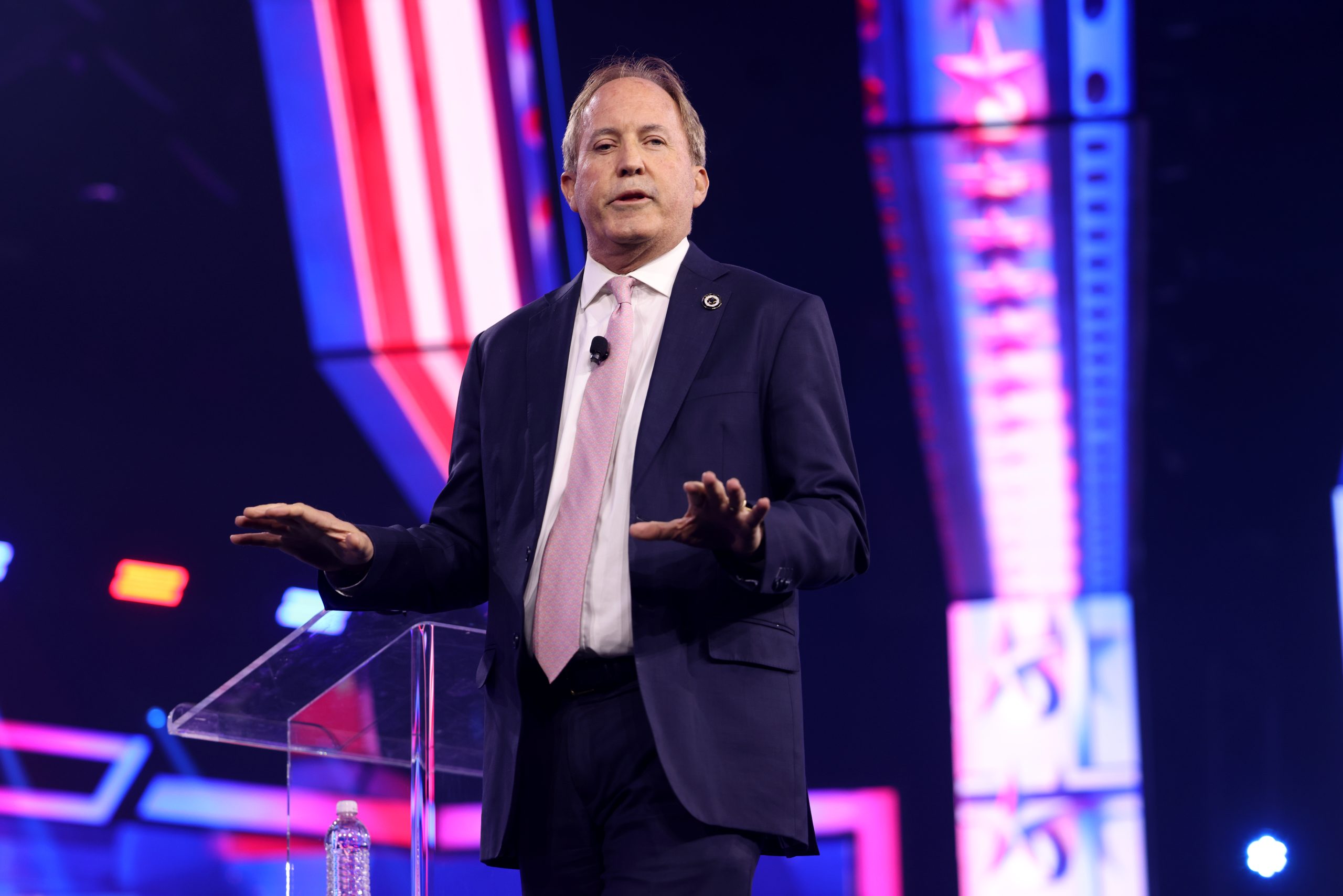
That line gave Paxton a compact political contrast. It presented Talarico as using religion to judge people connected to one of Texas’ defining industries, and it cast Paxton as the candidate defending a more familiar conservative alignment of faith and fossil-fuel politics.
But the reported exchange turned quickly. As Paxton moved on, someone in the crowd shouted, “You cheated on your wife!” Video and accounts cited by LGBTQ Nation indicate that the crowd groaned, began chanting “USA,” and that the person was escorted from the venue.
The interruption did not establish a new fact about Paxton. It brought a previously public personal controversy into a moment when Paxton had made biblical authority and Christian conduct central to his criticism of Talarico.
Talarico’s position is more specific
Paxton’s description of Talarico’s argument leaves out a key distinction in Talarico’s stated position. Talarico has argued that protecting the Earth and limiting damage from greenhouse-gas emissions are Christian responsibilities.
That is an argument for environmental stewardship rooted in faith. It is not necessarily a claim that every person who supports the oil and gas industry is outside Christianity.
The difference may sound theological, but it has direct campaign value. Paxton’s framing turns the question into whether Talarico is excluding Texans from religious belonging because of their views on energy. Talarico’s framing asks whether Christian ethics can support a more forceful response to climate risks and pollution.
Both approaches use faith as political language, but they aim in opposite directions. Talarico is attempting to challenge the assumption that Christianity naturally belongs alongside fossil-fuel politics. Paxton is defending that traditional association before an audience in a state where oil and gas remain central to the economy, employment base and political identity.
The heckle revived a public dispute
The shout at the rally referenced a sensitive matter that requires careful distinction between documented events and wider allegations. In July 2025, Angela Paxton announced that she had filed for divorce from Ken Paxton after 38 years of marriage.
In her public statement, Angela Paxton said she was filing on “biblical grounds” and referred to recent discoveries, while describing marriage as a sacred covenant. Ken Paxton responded at the time by asking for prayers and privacy.
The divorce remains unresolved publicly, and Paxton is still married. Broader claims about his private life have circulated in political coverage, but not all have been adjudicated in court.
That distinction is important. The rally heckler’s accusation should not be treated as proof of a new claim. Its political force came from its timing: Paxton had just questioned an opponent’s Christian consistency, allowing critics to turn the same question of personal conduct back toward him.
Faith is now part of the contest
Talarico has made Christianity visible in his public political language even while advancing positions more commonly associated with the Democratic Party’s progressive wing. His stated approach is not to keep religion out of politics, but to argue that faith can support environmental protection, economic fairness and a more inclusive politics.
That creates an unusual contest. Texas Republicans have long held an advantage with many religious voters, and Paxton’s political message is built for that landscape. Talarico is trying to contest the notion that one party alone can speak for Christian voters.
Paxton supporters may regard the Leviticus line as a fair reply to what they see as Talarico’s selective use of religion. Talarico supporters may see Paxton’s version as a distortion that transforms a stewardship argument into a test of who qualifies as Christian.
Neither viewpoint settles the underlying policy dispute over emissions, energy jobs, climate risks or the pace of an energy transition. The San Antonio episode instead showed how readily those substantive questions can get eclipsed when candidates make faith and character part of the argument.
Why the moment carries risk
Political rhetoric about religion often favors the shortest and most emotionally direct message. A joke invoking Leviticus can spread more easily than a detailed discussion about greenhouse-gas emissions, environmental stewardship or the economic role of oil and gas.
A shouted accusation can move even faster. That dynamic gives candidates a reason to make sharp contrasts, but it also means the contrast may not remain under their control.
For Paxton, the risk is especially clear because his public political coalition includes socially conservative voters who place high value on religious identity, family and personal conduct. For Talarico, the challenge is different: he must persuade voters that his religious language reflects a genuine moral case rather than an opportunistic campaign strategy.
The available reporting focuses on the rally moment and does not indicate whether Paxton will address the heckler’s accusation directly or whether Talarico will respond. It is also unclear whether the clip will resonate beyond politically engaged audiences. A single interruption does not resolve the contest, but it offers an early illustration of how arguments about faith, energy and personal credibility can collide in the Senate race.
Leave a Reply