
An opinion writer warns that a closely divided House could turn election contests into a new front in the fight over political power. The key distinction is between a constitutional procedure that exists on paper and evidence of a coordinated plan to use it.
The MAGA movement and House Speaker Mike Johnson are at the center of an allegation that Republicans could use a congressional loophole to retain power after an election loss. A Hill opinion column considers whether Johnson could challenge or subvert results from the November 2026 midterm election by contesting House seats, even as Democrats are widely expected by the writer to win House control and the Senate remains uncertain.
The outcome described is speculative, not an established plan. Still, the concern draws attention to a real constitutional rule: the House decides disputes over the elections, returns and qualifications of its own members—a power that could matter greatly if a handful of close races determines control of Congress.
The warning is an opinion, not proof
The argument comes from James D. Zirin, a former federal prosecutor and legal analyst, in an opinion piece published by The Hill. Zirin argues that Donald Trump and allies in the MAGA movement could try to cast doubt on Democratic victories, then use election contests to delay or block the seating of Democratic members-elect.
That is a forecast of what could happen, not reporting that Republican leaders have agreed to carry out such a strategy. The column does not present evidence of a coordinated scheme by Johnson, Trump or congressional Republicans to contest specific 2026 races.
That distinction matters. Election challenges are not automatically illegitimate; candidates have long had avenues to challenge results they believe were wrongly certified. The concern raised by Zirin is about using that process strategically, particularly in a narrowly divided chamber, rather than to resolve a substantiated dispute.
Why House contests can affect control
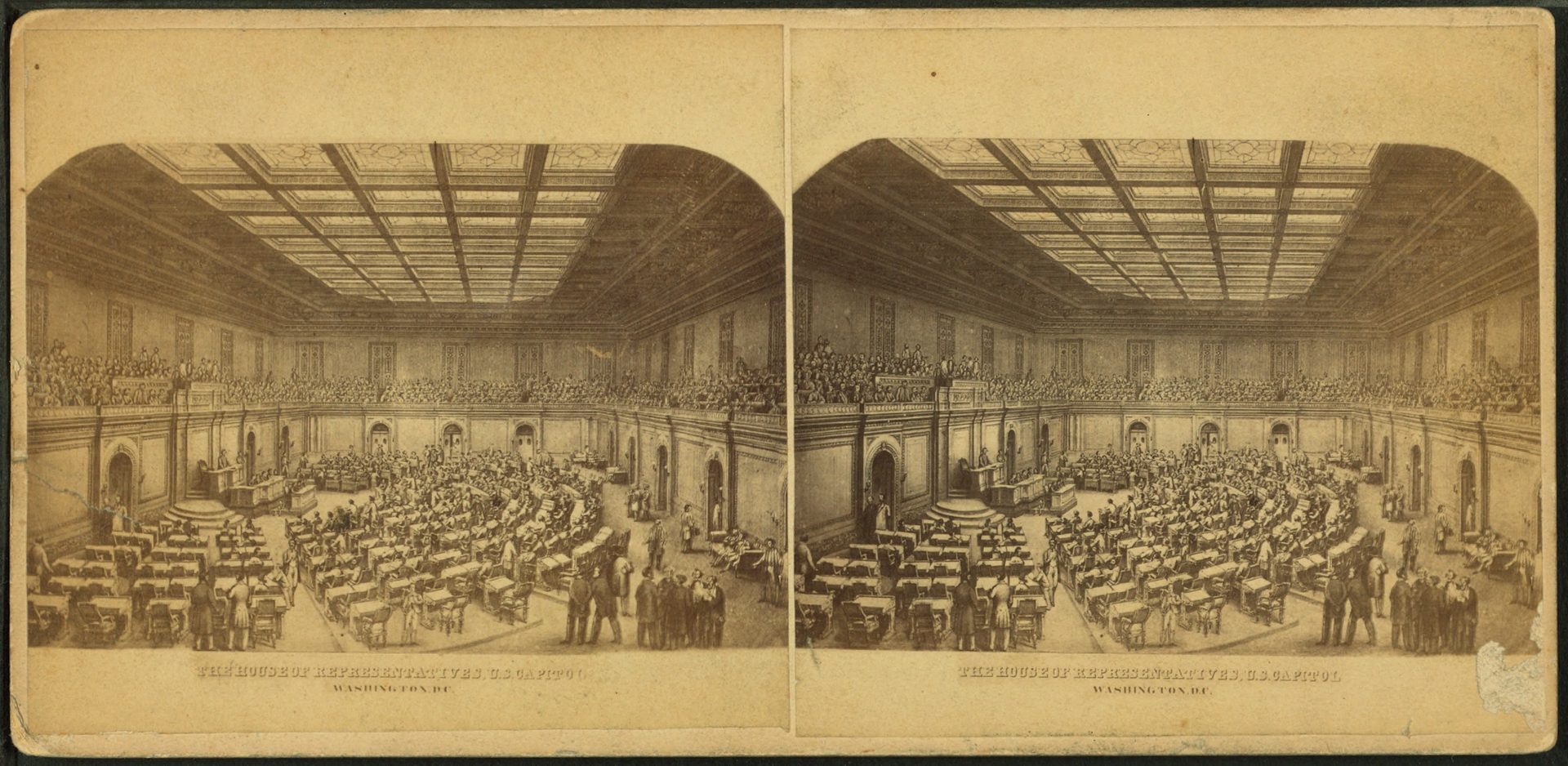
Article I, Section 5 of the Constitution says that each chamber of Congress is the judge of the elections, returns and qualifications of its own members. In practical terms, the House has a role in resolving disputes over who is entitled to hold a House seat.
A defeated House candidate may contest an election, and the House can consider the matter. Zirin’s column emphasizes a particularly fraught possibility: if the status of one or more seats remains unresolved when a new Congress organizes, the partisan balance could look different from the tally voters expected on election night.
Under the scenario outlined in the opinion, a close House result could create an incentive to contest seats won by the other party. If members-elect are not seated while disputes are pending, even a temporary shift in the working majority could influence the selection of a speaker and control of the chamber’s agenda.
That possibility is why election administration experts and lawmakers tend to focus so closely on certification timelines, recount rules and clear state procedures. The more decisive the margin, the less likely a single contested seat can reshape control of the House.
Johnson’s past election stance fuels concern
Zirin points to Johnson’s role in efforts challenging the 2020 presidential election results as a reason to question how he might handle a disputed congressional outcome. Johnson supported a legal effort brought by Texas that sought to challenge election procedures in several states, an effort the Supreme Court declined to hear on the merits because Texas lacked standing.
Critics see that history as reason for heightened scrutiny of any attempt to challenge 2026 results. They argue that political leaders who embraced claims about the 2020 election have an obligation to be especially clear that certified results will be respected.
Republicans and Johnson’s supporters could counter that prior legal and political positions do not establish an intention to overturn future elections. A congressional leader’s public views, after all, are not the same thing as proof that the House will reject certified winners or that members will support an extraordinary procedural move.
The unresolved question is not whether the House possesses authority over its membership. It does. The question is how responsibly that authority would be exercised if partisan control rested on a razor-thin margin.
Close races create the pressure point
The Hill column cites the Cook Political Report’s assessment of 18 House tossup races, along with additional seats that lean toward one party or the other. Such ratings can change as campaigns develop, but they illustrate the broader point: control can come down to a limited number of competitive districts.
In a landslide, an election contest in one district is unlikely to decide who controls the House. In a 218-to-217-type environment, it could have far larger consequences. That is the pressure point behind the article’s warning.
The Senate operates under its own procedures and, as Zirin notes, normally seats the certified winner without prejudice while a contest proceeds. The House and Senate also differ politically because each chamber sets its own rules and makes its own institutional decisions.
The column’s prediction that Democrats are favored to win the House and that the Senate is a tossup should be read as an assessment made by the author, not as a settled election outcome. More than two months before any November election, campaigns, candidate fields, court rulings and local election conditions can all shift the map.
Election contests have a long history
Congressional election disputes are not new. Zirin cites research by University of Southern California law professor Jeffrey Jenkins finding 601 House election contests between 1789 and 2002, or about 5.6 per Congress on average.
That history cuts in two directions. It shows that contests are a recognized part of the constitutional system rather than an invented loophole. It also shows why the process demands restraint: a mechanism designed to address genuine disputes can become destabilizing if it is treated as a routine partisan weapon.
The author’s broader fear is that familiar arguments about voter rolls, mail voting or election security could be recycled to challenge results without persuasive proof of outcome-changing wrongdoing. Those types of claims would need to be evaluated under the applicable facts and procedures of each race; broad allegations alone do not establish that an election was improperly decided.
The real test comes after certification
For voters, the practical takeaway is less dramatic than the phrase “loophole” suggests. State and local officials administer elections, canvass results and certify winners under state law. Recounts, audits and court challenges can occur before a congressional contest reaches the House.
But the final seating power described in the Constitution means Congress has an institutional role that cannot be ignored. If 2026 produces several extremely close House contests, the fight over control may not end when television networks call the races.
There is no demonstrated MAGA plan in the material presented by the opinion column. There is, however, a legitimate institutional question beneath its provocative framing: whether elected officials of either party will treat congressional election-contest procedures as a narrow remedy for real disputes—or as a tool for gaining leverage after voters have made their choice.
That answer will depend on the facts of individual races, the margins involved, the evidence offered by challengers and the willingness of House members to put electoral legitimacy ahead of short-term partisan advantage.
Leave a Reply