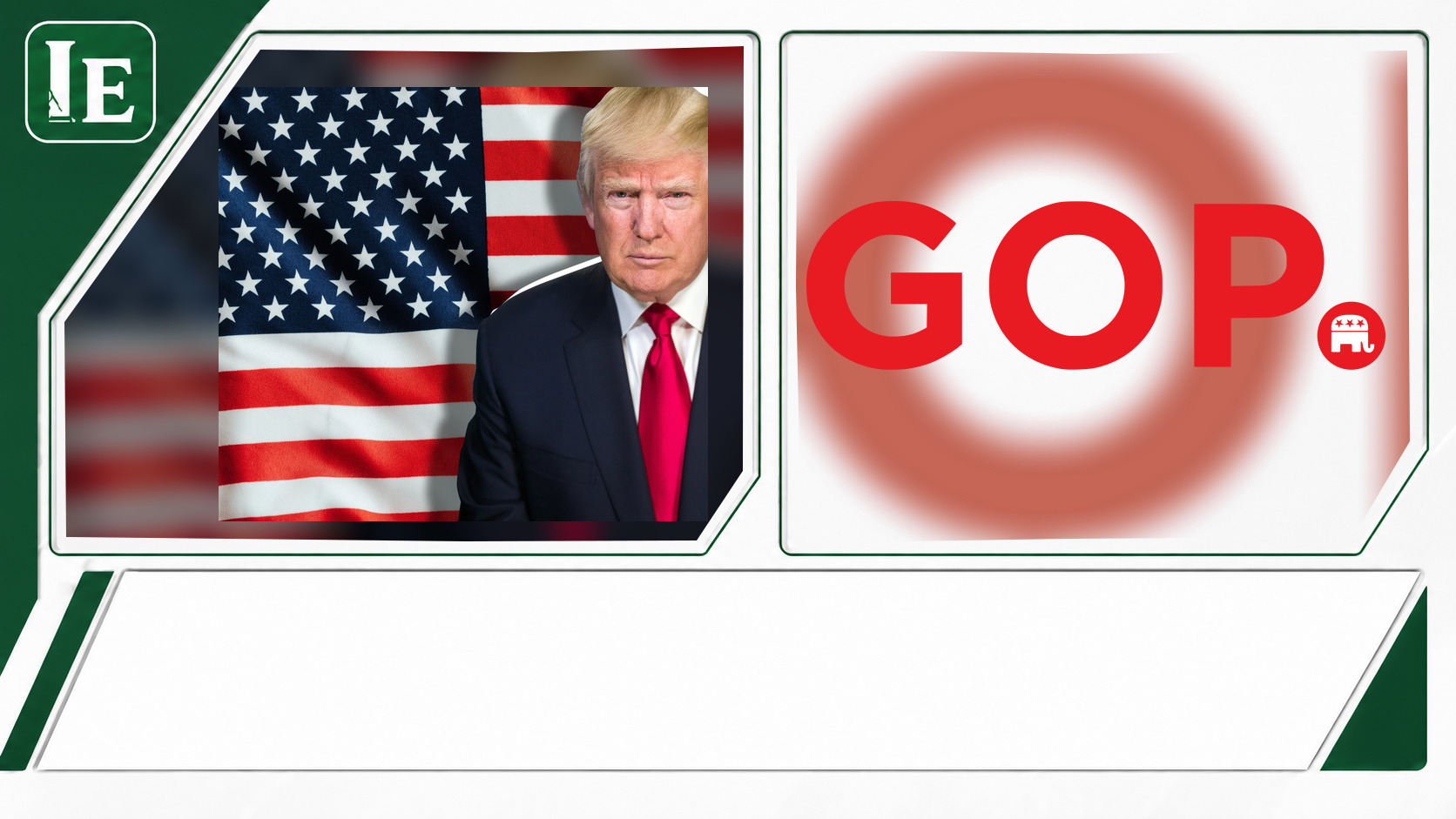
The claim of a “political obituary” for Donald Trump is a sharp prediction, not a measurable outcome. The bigger issue is how elections, endorsements and party behavior may reveal his continuing place in the Republican Party.
Donald Trump has been declared politically finished by an unnamed election analyst in what amounts to a “political obituary.” But the claim is a prediction rather than a final verdict, and it does not establish that Trump’s influence in the Republican Party has ended.
The available account provides no named analyst, underlying polling, electoral result or direct quotation laying out the case. That leaves a more useful question: what would actually show whether Trump’s political future is in decline, and what would it mean for the GOP?
A claim without its evidence
Calling a politician “dead” politically is designed to sound conclusive. In practice, it usually signals that a commentator believes a leader’s coalition is weakening, their ability to direct a party is slipping or their standing has been damaged.
That is not the same as proof that the politician has lost relevance with voters, party officials or candidates. The source material behind this assessment does not identify the analyst or supply detailed evidence for the conclusion, so the specific argument cannot be fully evaluated on its merits.
The narrow, supportable takeaway is that an analyst has offered a bleak view of Trump’s prospects. The larger assertion—that Trump is conclusively finished as a political force—would require more than an attention-grabbing phrase.
Political power has many measures
Holding office is only one form of political power. A major figure can affect primary contests, endorsements, campaign language, media attention, fundraising networks and the issues that candidates believe they need to emphasize.
That is why a single poll, setback or favorable moment cannot independently settle the question of Trump’s standing. Polls can capture a point in time, but they do not by themselves show who has the power to shape a party’s incentives over the longer term.
A fuller picture would include whether Republican candidates keep seeking Trump’s endorsement, whether elected Republicans publicly align with his priorities and whether voters reward candidates who present themselves as his allies. It would also include whether party leaders and ambitious candidates begin to put clearer distance between themselves and Trump.
Why the distinction matters
Predictions of a post-Trump era have surfaced repeatedly since Trump entered presidential politics. They often follow moments that appear to reveal limits on his coalition, strain relationships with Republican officials or prompt fresh debate over the GOP’s direction.
Yet there are two different questions inside those predictions. One is whether Trump personally retains the same degree of political influence. The other is whether Trumpism—the political style, issues and voter alliance associated with his rise—would remain durable without him.
Those questions can produce different answers. Trump’s direct influence could decline while candidates continue to borrow heavily from his political playbook. Conversely, a strong personal following would not erase arguments within the party about strategy, policy or the next generation of Republican leadership.
A 2020 Guardian report noted that commentators were already debating whether a defeat would loosen Trump’s hold on the GOP. It also cautioned that the end of one candidacy would not necessarily mean the end of Trumpism.
The GOP’s unresolved succession fight
The attention around Trump’s political future is not only about one politician. It is also about who gets to define the Republican Party if its most influential figure loses standing, changes roles or faces a challenge from within the coalition he helped reshape.
Some Republicans have argued for a more traditional conservative message centered on limited government, foreign-policy alliances and institutional norms. Others believe that approach would fail to serve voters Trump brought into the party and favor preserving a more populist, confrontational model.
Even a genuine reduction in Trump’s personal influence would not automatically settle that disagreement. Candidates could compete to inherit his coalition, retain selected elements of his agenda or attempt to build support around dissatisfaction with both Trump and the party establishment.
That makes the “political obituary” framing consequential beyond Trump’s own career. It is also an argument about the future identity of the GOP and the voters its leaders hope to hold together.
Events will test the forecast
The analyst’s prediction can be tested only through accumulated political evidence, not through the forcefulness of its wording. No single data point would be enough, because influence can persist in some parts of party politics even as it weakens in others.
- Primary results: Whether candidates backed by Trump win against Republicans offering an alternative.
- Voter behavior: Whether his support remains durable across different groups of Republican voters and key states.
- Party alignment: Whether elected Republicans continue to seek his endorsement and echo his priorities.
- Fundraising and organizing: Whether Trump and allied groups can still direct money, volunteers and attention toward selected candidates.
- Successor politics: Whether Republicans distance themselves from Trump or compete to claim his mantle.
These measures can point in different directions. A weak endorsement record could exist alongside strong grassroots loyalty, while a visible rival might still embrace much of Trump’s approach to politics.
A prediction, not an epitaph
American political history includes leaders who were written off after defeats, scandals, poor polling or clashes with party elites, only to regain influence as circumstances changed. That does not mean every prediction of decline is wrong; it means the label itself is not the evidence.
Critics may see electoral setbacks, defections by former allies or interest in a different Republican messenger as signs that Trump’s position is weakening. Supporters may point to continued loyalty, turnout potential and his ability to set the terms of political debate. Both sets of indicators matter more than an obituary-like declaration.
For now, the available material supports the existence of a stark assessment of Trump’s future, not a settled outcome. Whether his influence expands, contracts or takes a different form will be determined over time by elections, voter behavior and the choices Republicans make about their party’s future.
Leave a Reply