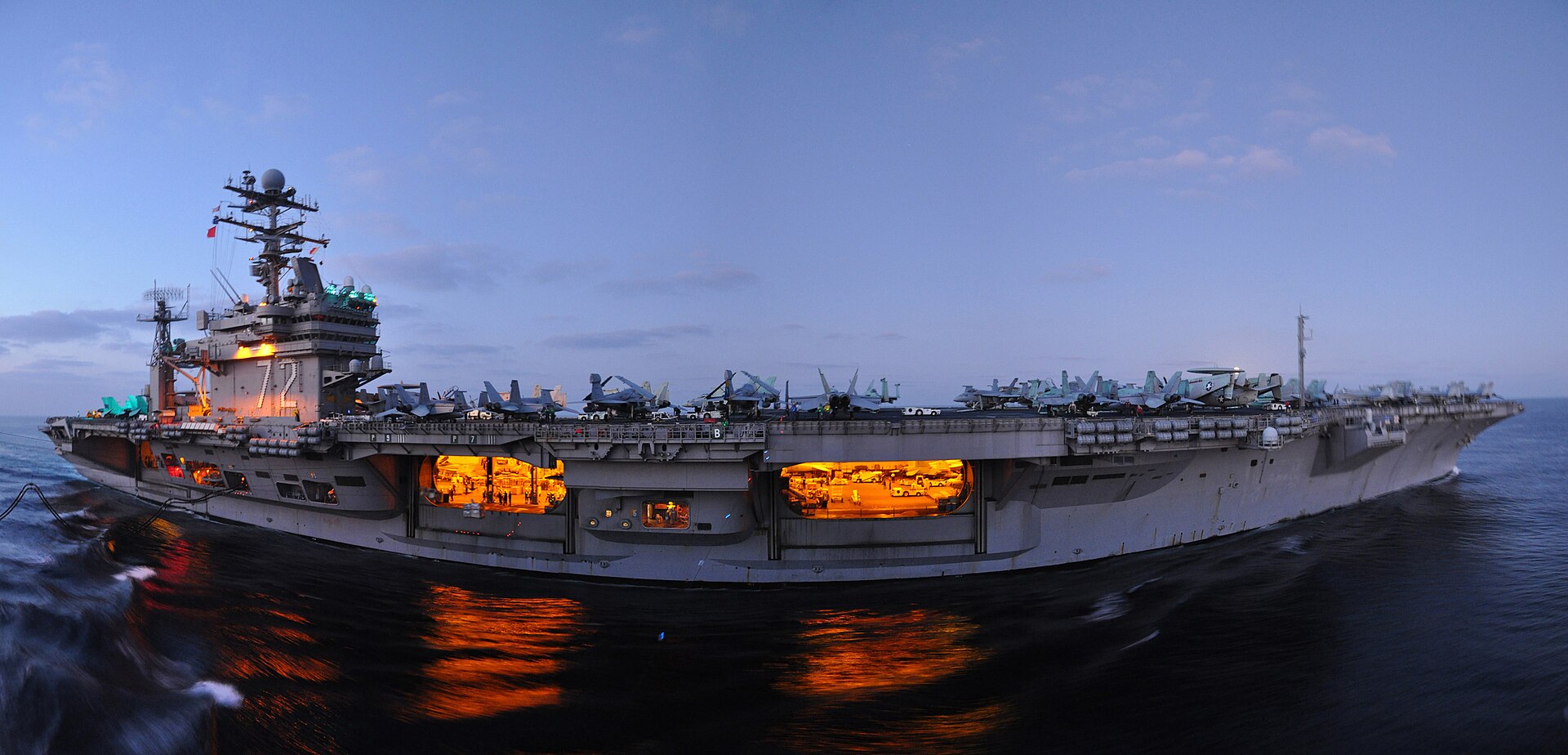
The reported message tied to the USS Abraham Lincoln is not a definitive official assessment of Navy readiness. It does, however, spotlight the hard-to-measure demands that long conflicts place on crews, maintenance, logistics and carrier strike groups.
The USS Abraham Lincoln reportedly warned the U.S. Navy about war preparedness, raising broader questions about Navy war readiness and whether Navy carrier forces and carrier strike groups are prepared for modern conflict. The reported lesson from the nuclear-powered carrier centers on pressures facing personnel, deployment plans and the wider support system required to keep a carrier force operating.
The available public reporting does not establish that the USS Abraham Lincoln itself issued a formal institutional warning, and the exact circumstances behind the phrase remain unclear. Still, the underlying issue is consequential: a force built around planned rotations must also be able to adapt when a conflict lasts longer, shifts faster or carries greater risks than expected.
A carrier depends on a system
The USS Abraham Lincoln, or CVN-72, is the fifth Nimitz-class nuclear-powered aircraft carrier, according to Naval Air Force, U.S. Pacific Fleet. Nuclear reactors allow the ship to operate for extended periods without conventional refueling, but they do not make a carrier independent.
A carrier’s fighting capability rests on much more than the vessel itself. Its air wing, escorts, supply ships, aircraft maintenance, munitions, intelligence, communications and thousands of sailors all matter to whether a strike group can perform its mission over time.
The Navy describes Lincoln’s mission as conducting carrier air warfare and helping plan, control, coordinate and integrate air-wing squadrons. That makes the readiness question broader than whether the carrier can sail or launch aircraft. The central test is whether the full strike group can sustain operations amid uncertainty, danger and heavy logistical demand.
Why schedules can become a weakness
Carrier deployments are organized around maintenance requirements, training pipelines, personnel rotations and the availability of other ships. Those schedules are not administrative details; they are part of how the Navy preserves future readiness.
But a conflict does not necessarily follow a planned deployment calendar. The Defense Department illustrated that tension in an October 2024 announcement that the Abraham Lincoln carrier strike group would remain in the U.S. Central Command area beyond its regular rotation date while Washington sought to strengthen regional deterrence and protect U.S. forces.
Keeping a carrier in place can provide continuity during a crisis. It can also shift strain elsewhere: sailors awaiting relief remain deployed, aircraft and ships may have less time for maintenance, and commanders may have fewer assets available for other regions.
The reported statement that the Navy “didn’t plan for this war” captures that mismatch. Military organizations can prepare for categories of conflict, yet still have to revise their assumptions when duration, geography, adversary tactics or political limits change.
The burden extends beyond firepower
Aircraft carriers are often discussed in terms of their size, aircraft and visible military power. Sustained readiness also has a human dimension. Flight operations, watchstanding, repairs and security work continue around the clock, placing an enduring demand on sailors.
Long or altered deployments can affect morale, family stability and retention. They can also complicate training, because crews focused on immediate operations may have less time to practice other missions or learn new equipment and tactics.
There is a fair counterargument: the Navy is intended to deploy when national security conditions require it. Crews that operate under pressure can gain experience that peacetime exercises cannot fully reproduce, and an extended mission alone does not demonstrate a readiness failure.
The concern is instead whether hard deployments become an unsustainable pattern. A force may complete the mission in front of it while accumulating risks that emerge later through maintenance backlogs, personnel departures or reduced coverage in other parts of the world.
Modern threats widen the challenge
The Abraham Lincoln has previously been part of the broader U.S. effort to deter escalation in the Middle East. In its 2024 statement, the Pentagon said the strike group’s extended presence was intended to deter aggression, lower the risk of a wider regional conflict and defend U.S. people and interests.
That role helps explain why carriers remain central to U.S. strategy. They can bring substantial airpower without depending on a host nation’s air base, signal U.S. commitment and offer options from deterrence patrols to defensive operations.
Yet operating in a contested region presents conditions that differ from older assumptions about power projection. Missiles, drones, cyber disruption and attacks on supply routes can increase the importance of escorts, air and missile defense, intelligence and reliable replenishment.
Those conditions turn endurance into a collective challenge. A carrier’s reactors may give it staying power, but no carrier strike group can separate itself from the people, ships, weapons and supply networks needed to protect and support it.
The readiness questions still open
Public reporting provided here does not identify the exact conflict, operational tasking or internal assessment behind the reported Lincoln message. That absence matters. It would be premature to portray the phrase as a definitive official judgment on the U.S. Navy’s present readiness.
Even so, the report points to practical questions the Navy must continuously test:
- Whether carrier strike groups have enough escorts and air-defense capacity for prolonged operations.
- How quickly ships, aircraft, weapons and replacement personnel can reach an expanding crisis.
- Whether maintenance and training cycles can absorb unexpected deployment extensions.
- How long sailors and their families can bear high-tempo operations without harming retention.
- Whether the Navy can sustain commitments in multiple regions when one crisis consumes major assets.
More funding may help with shipbuilding, munitions and maintenance, but industrial capacity, experienced crews and time cannot be created immediately. Directing more resources toward one urgent theater may reduce danger there while leaving fewer options elsewhere.
Readiness is the ability to adapt
The reported lesson associated with the USS Abraham Lincoln is ultimately about adaptation rather than a single carrier’s capability. A nuclear-powered ship offers important endurance, but endurance is not the same as effortless staying power.
For the U.S. Navy, readiness means generating forces, supplying and protecting them, rotating personnel and making decisions when circumstances no longer resemble the original plan. That broader measure will continue to shape debate over Navy deployments, force structure and budgets long after one carrier leaves station.
Leave a Reply