
The 1980 election shows how economic hardship and an international crisis can combine into a broader judgment about presidential leadership. Its relevance to Donald Trump lies in the pressure points voters notice, not in any supposed historical destiny.
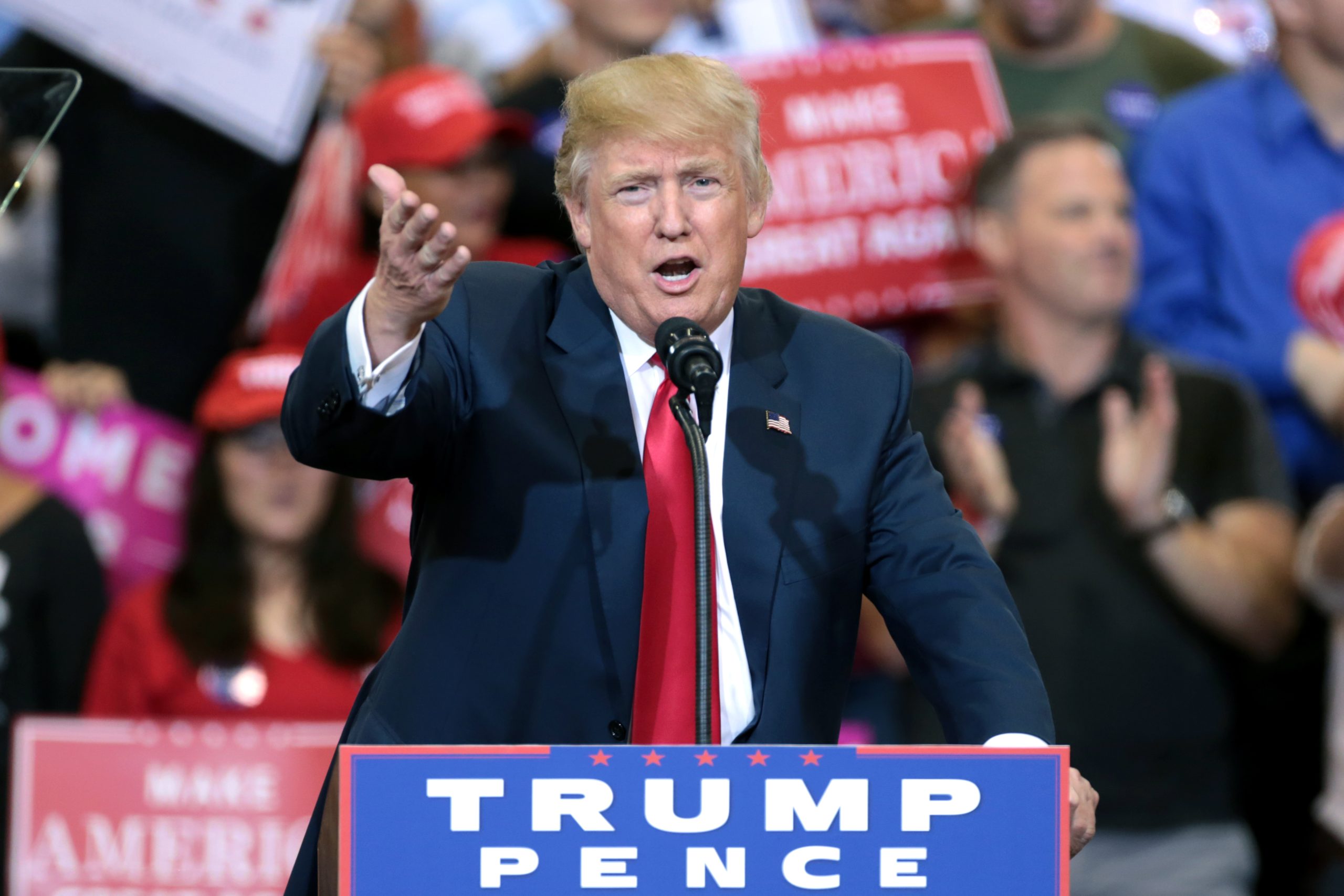
Donald Trump’s presidency is being compared with the 1980 U.S. presidential election, when U.S. voters turned against Jimmy Carter after economic and international strain and elected Ronald Reagan. The 1980 lesson offers a limited warning rather than a prediction about Trump: a presidency can look as though it has lost control when voters connect separate pressures into one judgment about leadership.
The so-called 1980 curse is not a literal force or a forecast of Trump’s outcome. It is a political metaphor for the point at which economic anxiety, foreign-policy trouble and doubts about competence begin to reinforce each other in the public mind.
1980 was more than a landslide
Ronald Reagan’s victory over Carter is often recalled for its scale. But the result came after a long period in which Americans were dealing with persistent economic problems and a highly visible international crisis.
The National Archives describes the final years of the Carter administration as a period of stagflation, the combination of high unemployment and inflation. The condition persisted with little improvement under Carter’s leadership, adding pressure to household finances and the public debate over the economy.
At the same time, the Iran hostage crisis became a defining test of the administration. Beginning in 1979, 52 American civilians and diplomats were captured and held prisoner in Iran.
Those events did not operate in isolation. The central historical point is how they could be read together: an economy causing pain at home and a crisis abroad raising questions about the nation’s strength and the president’s ability to respond.
The rescue mission intensified doubts
Carter authorized Operation Eagle Claw, an effort to rescue the hostages. According to the National Archives, mechanical problems involving helicopters and a sandstorm led military advisers to recommend that the mission be aborted.
As U.S. forces were leaving the staging area, one helicopter crashed into another. Both vehicles were destroyed, and eight American soldiers were killed.
The National Archives says the failed mission caused Carter a tremendous loss of public confidence and further harmed his reelection campaign. The episode mattered politically not simply because it was a setback, but because it became part of a larger story about an administration under strain.
That distinction is important in any comparison with Trump. A presidency is not necessarily defined by one difficult event. The greater risk emerges when voters treat multiple events as evidence of a single, broader failure to manage circumstances.
Reagan offered a competing case
The final Electoral College count underscored the depth of Carter’s defeat. Reagan and George H. W. Bush won 489 electoral votes, while Carter and Walter Mondale won 49, according to the National Archives.
Reagan’s campaign offered voters a clear alternative to the Carter administration. The National Archives describes Reagan’s platform as emphasizing lower taxes, less regulation, greater defense spending and a restoration of national confidence.
The landslide can make the political shift look inevitable in retrospect. It was not a simple consequence of a historical pattern. Carter’s loss followed specific circumstances: prolonged stagflation, the hostage crisis, the failed rescue mission, a contentious political climate and an opponent able to organize public frustration into a coherent message.
That is why the 1980 comparison should not be reduced to the idea that a difficult presidency automatically ends in defeat. The historical record describes a particular convergence of conditions, not a permanent formula.
Why Trump is not Carter
Donald Trump’s political position is not Jimmy Carter’s, and the Carter-Reagan contest cannot be mapped directly onto a different presidency. Reagan was challenging a one-term Democratic incumbent after the particular economic and international crises that damaged Carter’s standing.
PBS, in a separate comparison of Trump and Reagan, described their differences as evidence of how much the political landscape had changed over 35 years. That observation is a useful check on easy analogies: history can clarify a dynamic without deciding what happens next.
Supporters of Trump may argue that disruption is not the same as weakness and that a confrontational governing style can be interpreted as resolve. Critics may contend that the same style can make it harder for an administration to project steadiness when events go wrong.
Both views turn on present performance, not on a historical label. The relevant question is whether voters see the administration’s choices and the conditions around them as signs of effective leadership or as accumulating evidence of trouble.
The confidence test voters apply
The strongest lesson from 1980 is that voters respond to lived conditions rather than to political metaphors. Prices, employment, household finances and the handling of international events can all influence whether an administration appears capable and in control.
Economic pain can sharpen concern about events overseas. A foreign-policy setback can deepen existing doubts about leadership. When those concerns begin to reinforce one another, the political challenge is no longer limited to any single decision or controversy.
For Trump, what remains unclear is whether any strains facing his presidency become connected in voters’ minds. Individual criticism, economic turbulence or foreign-policy setbacks do not by themselves recreate 1980.
The more limited warning is also the more useful one: public confidence can be difficult to restore once voters believe events are overtaking a presidency. The 1980 election does not supply a verdict on Trump. It shows why perceptions of control can become decisive when pressure builds on several fronts.
Leave a Reply