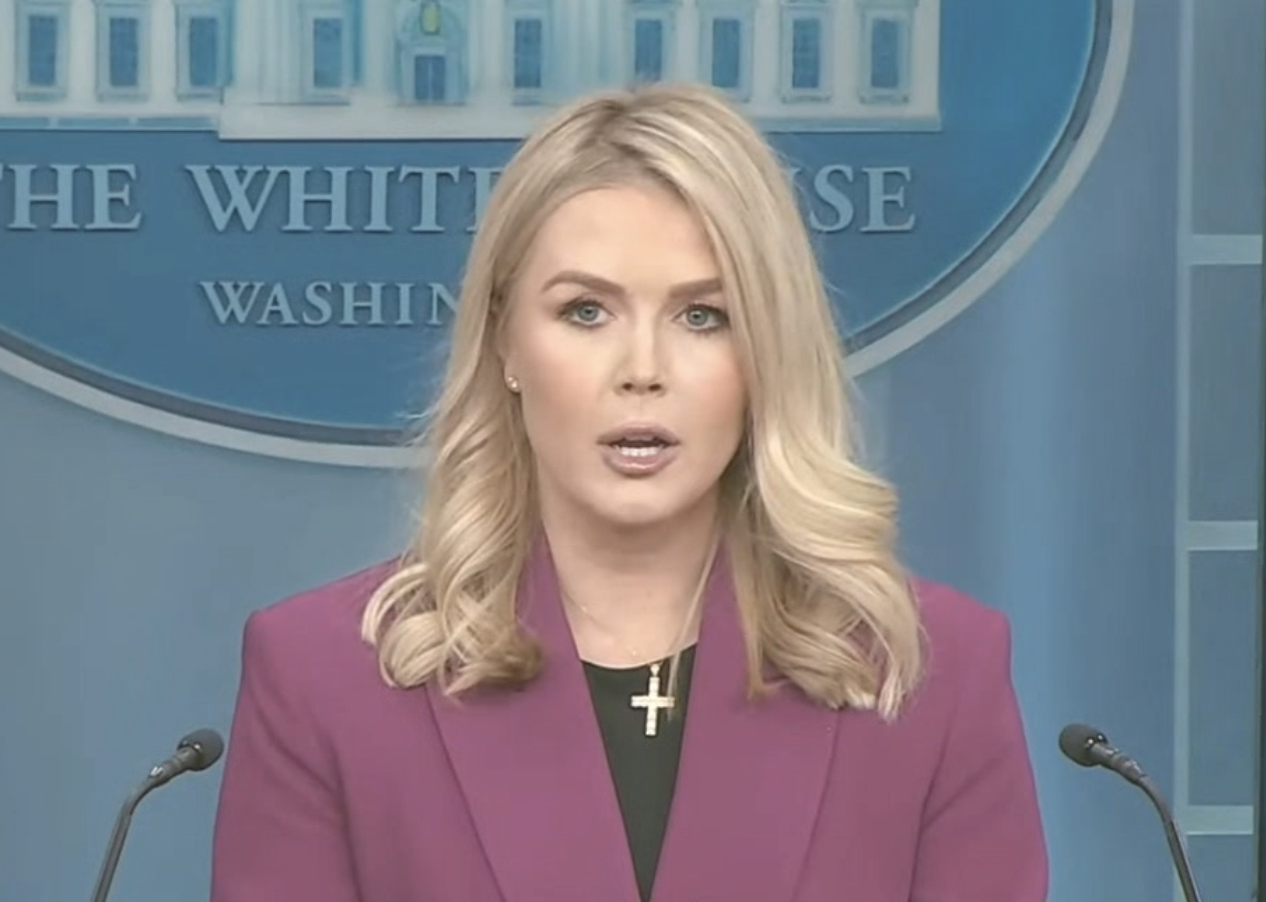
Leavitt’s widely shared message has been framed as cryptic, but her full statement offers a personal explanation for stepping away from one of Washington’s most visible jobs. Her exit also leaves Trump facing another search for a chief spokesperson.
Karoline Leavitt shared a cryptic post about “truth” as she announced she will leave her role as Donald Trump’s White House press secretary. But Leavitt’s own words point to a personal decision: after returning to the White House following the birth of her daughter, she said she could not give both the job and her two young children the time and attention they deserve.
Trump said Leavitt will step down at the end of the month and remain one of his outside advisers. Her departure ends a highly visible White House tenure, while leaving open the question of who will become the president’s next chief spokesperson.
The “truth” behind the post
The phrase that drew attention was not presented by Leavitt as a political broadside or a hidden complaint about the administration. In her post on X, she described her time as press secretary as “the honor and adventure of a lifetime,” then explained the difficult calculation behind her decision.
Leavitt said that returning from maternity leave had made her realize she could not be “the best mom” to her two children while also meeting the constant demands of serving as White House press secretary. She called the choice bittersweet and said she was beginning a new chapter.
That fuller context matters. A brief quotation about “truth,” detached from the rest of the message, can invite speculation about an internal rupture. Her statement, however, tied the word explicitly to family life and the intensity of the role.
Trump framed the exit warmly
Trump announced Leavitt’s departure in a social-media post, calling her one of his “most trusted aides.” He said she was leaving to spend time with her children and family, a decision he said he understood and respected.
He also said she would become one of his top outside advisers and remain an influential Republican voice. That distinction is important: Leavitt is leaving the White House job, not necessarily the president’s political orbit.
There is still a practical difference between the two roles. The press secretary is responsible for speaking daily, or near-daily, on behalf of an administration under intense scrutiny. An outside adviser can retain access and influence without carrying the same public-facing burden.
A demanding job meets family life
Leavitt, 28, became the youngest person to serve as White House press secretary when she took the post last year. She welcomed a daughter in May with her husband, Nicholas Riccio, and also has a two-year-old son.
She returned from maternity leave last month, according to reporting by the BBC. Her explanation puts a familiar but often overlooked tension in unusually public terms: White House communications jobs do not operate on a predictable workday, and crises, travel and breaking news can quickly consume personal time.
Supporters may view her decision as a straightforward family choice and a reminder that senior political jobs can carry a steep personal cost. Critics of the administration may still question whether other factors played a role, but neither Leavitt nor Trump cited a policy disagreement, personnel dispute or loss of confidence.
Absent evidence to the contrary, the clearest account remains the one Leavitt gave herself.
Her combative press-room legacy
Leavitt’s exit matters beyond the personal story because she became one of the administration’s most recognizable messengers. During her tenure, she frequently accused parts of the press corps of bias and forcefully defended Trump’s policies in briefings and television appearances.
Her office also took control of the White House press pool’s organizational duties, a major break from the long-standing arrangement involving the White House Correspondents’ Association. The administration initially barred the Associated Press amid a dispute over its refusal to use Trump’s preferred “Gulf of America” terminology.
Those clashes made Leavitt a polarizing figure. Allies praised her discipline and willingness to confront reporters, while critics argued that the administration’s approach narrowed independent access and increased hostility toward the press.
Any successor will inherit both the podium and that broader dispute over how the White House deals with journalists.
The replacement question now looms
Trump has not identified Leavitt’s replacement. The White House press secretary is a role that demands credibility with the president, command of fast-moving policy details and the ability to withstand relentless public questioning.
During Leavitt’s roughly seven-week maternity leave, several senior officials filled in at the briefing-room podium, including Vice President JD Vance, Secretary of State Marco Rubio and Interior Secretary Doug Burgum. Those appearances show the administration has experienced communicators available, though temporary stand-ins are not the same as a permanent press secretary.
Leavitt is also the second longest-serving press secretary across Trump’s two administrations, behind Sarah Huckabee Sanders, according to the BBC. Her replacement would be Trump’s sixth chief spokesperson across those administrations.
For now, the most grounded reading of Leavitt’s post is also the simplest: she is stepping away from an all-consuming job to focus on her family, while remaining connected to Trump as an adviser. The unresolved story is less about a cryptic message than about who will take her place at the White House microphone.
Leave a Reply