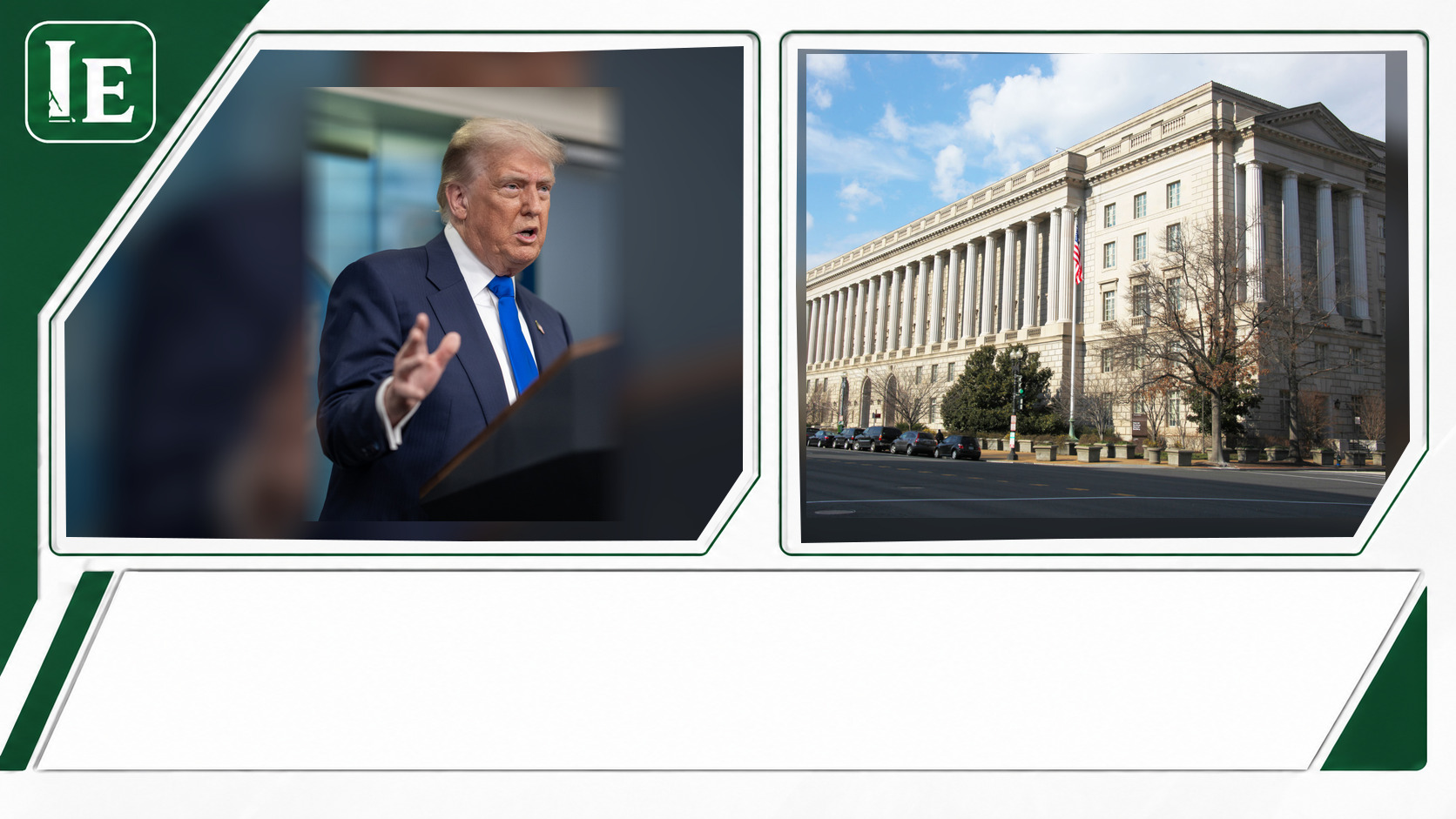
The deal resolved litigation over leaked tax information, but its wording has opened a larger debate about the limits of federal tax enforcement. Lawmakers, companies with Trump-family ties and senators from both parties have raised questions that the public record does not yet answer.
Todd Blanche signed a Justice Department settlement involving Donald Trump and the Internal Revenue Service on May 19 that barred certain tax claims involving Trump and his family business. The deal’s broad language has raised questions about whether it could protect Trump, his sons, the Trump Organization or related entities from future IRS audits or claims tied to earlier tax returns.
The settlement resolved a lawsuit over the unlawful disclosure of Trump tax-return information. What remains unsettled is the scope of the agreement: whether it is a tailored remedy for a serious privacy breach, as supporters could argue, or an unusually broad limit on tax enforcement, as critics contend.
What the May 19 deal says
According to CBS News reporting cited in the available record, the Justice Department finalized the settlement in May involving Trump, Donald Trump Jr., Eric Trump and the Trump Organization. The defendants were the IRS and Treasury Department.
The underlying lawsuit concerned tax-return information that was unlawfully disclosed by a government contractor and later reached media outlets in 2020. A settlement in response to that breach is not, by itself, the source of the current controversy.
The concern centers on the wording in a one-page document dated May 19 and signed by Blanche while he was acting attorney general. CBS News reported that it said the IRS and Treasury Department were “FOREVER BARRED and PRECLUDED” from pursuing claims related to tax returns filed before the agreement took effect.
That reported provision applies to Trump, his two oldest sons and the Trump Organization. It is the reason critics have described the arrangement as an audit-immunity deal.
The phrase at the center
The dispute turns on language that reportedly reaches beyond the plainly named parties. The settlement refers to trusts, parent companies, sister companies, related companies, affiliates and subsidiaries.
Those terms are broad enough to invite questions, but the available reporting does not establish that every business with a Trump-family connection is covered. The agreement does not, on its face, identify every venture that might later be described as an affiliate.
That distinction matters. A reference to related entities is not the same thing as a definitive finding that all such entities are insulated from audits, civil penalties or federal prosecution connected to conduct before the settlement.
There also has been no reported court test of the agreement’s reach, no reported IRS interpretation defining its limits and no documented instance in the supplied reporting of a Trump-affiliated company invoking the settlement as protection.
Senators seek answers from companies
Sen. Elizabeth Warren, Senate Minority Leader Chuck Schumer and Sen. Ron Wyden wrote to 11 companies and organizations with Trump-family ties, seeking to learn whether they believed the settlement applied to them.
Their inquiry focused on whether the deal could affect audits, civil penalties or federal prosecution tied to conduct predating the settlement. Warren called the agreement corrupt and warned that companies could see it as a “get-out-of-jail-free card.” That is a political characterization, not a judicial conclusion.
Still, the inquiry reflects a practical concern: if the terms are understood to extend beyond the named plaintiffs, the government may have given up enforcement authority broader than what is typical in a settlement involving confidential taxpayer information.
Senate Democrats, as the minority party, did not have subpoena power to force responses from Trump, his children or the businesses they contacted. That left key questions dependent on voluntary answers and the legal interpretation of the document itself.
Businesses distance themselves from deal
Several companies contacted by Senate Democrats did not embrace the idea that they were covered. CBS News reported that representatives for Trump Media and Technology Group, Kalshi, Polymarket, Kaz Resources, Powerus and American Bitcoin distanced themselves from the settlement.
A lawyer for Trump Media and Technology Group told senators that the company was not a party to the settlement and was unaware that it applied to the company, according to CBS News. Trump Media is majority owned by a trust listing Trump as a beneficiary.
Other recipients of the senators’ letters included World Liberty Financial, 1789 Capital, Tag Air and Foundation Future Industries. Warren’s office said some companies did not respond to the questions.
The companies’ responses do not settle the legal issue. They do show that businesses with direct or indirect Trump-family connections did not uniformly assume the deal created an automatic shield.
Why Blanche’s signature matters
Blanche’s role has become politically significant because he signed the document at issue. The settlement became a point of contention in efforts to confirm him permanently as attorney general, according to CBS News.
Republican senators also expressed reservations about the IRS provision and a separate $1.8 billion anti-weaponization fund connected to the deal. Sen. John Cornyn of Texas said the agreement appeared to give Trump audit immunity that no other taxpayer could receive.
The opposing view begins with the tax-return leak. Trump and his co-plaintiffs alleged that government failures allowed highly sensitive information to be disclosed, and a substantial negotiated settlement could be seen as a remedy for that violation rather than preferential treatment.
Neither argument resolves the central legal uncertainty: which claims, taxpayers and entities are actually covered by the agreement’s language.
What remains unknown
The supplied headline characterized Blanche as acting immediately after his swearing-in to preserve Trump’s IRS audit deal. The available reporting supports that Blanche signed the settlement as acting attorney general on May 19, but it does not independently document a separate post-swearing-in intervention or establish that motive.
That is more than a wording dispute. Signing a settlement is a documented government action; describing it as a rescue effort after a swearing-in suggests a sequence and purpose that would require separate evidence.
For now, the durable reported fact is narrower: Blanche signed a settlement that permanently bars certain government claims connected to earlier tax returns. Whether references to related companies, affiliates and subsidiaries create a broader barrier to IRS action remains unresolved.
Until the government provides a definitive interpretation or a court addresses the agreement, the debate will continue to rest on competing readings of a short settlement with potentially wide consequences.
Leave a Reply