
Miller’s sweeping critique of the left is less a policy blueprint than a sharp statement of the ideological divide shaping the Trump administration’s message. The interview also leaves key claims about public safety and policy outcomes open to scrutiny.
Stephen Miller criticized leftist ideology during an appearance on Fox News Channel’s The Will Cain Show, characterizing it as destructive and unable to build anything. The White House deputy chief of staff for policy argued that progressive movements dismantle existing societal structures rather than creating new ones, using the interview to draw a blunt contrast with the administration’s America First agenda.
Miller’s “they can’t build anything” argument matters because it packages disputes over policing, border security, education and the role of government into one larger political claim: that the country’s central divide is between people who preserve institutions and people who seek to tear them down.
Miller’s central argument on Fox
Speaking with host Will Cain, Miller described progressive politics as a movement focused on destruction and redistribution. He said its adherents look at the institutions and material gains created by American civilization with envy and hostility, then seek to take, dismantle and redistribute what others have built.
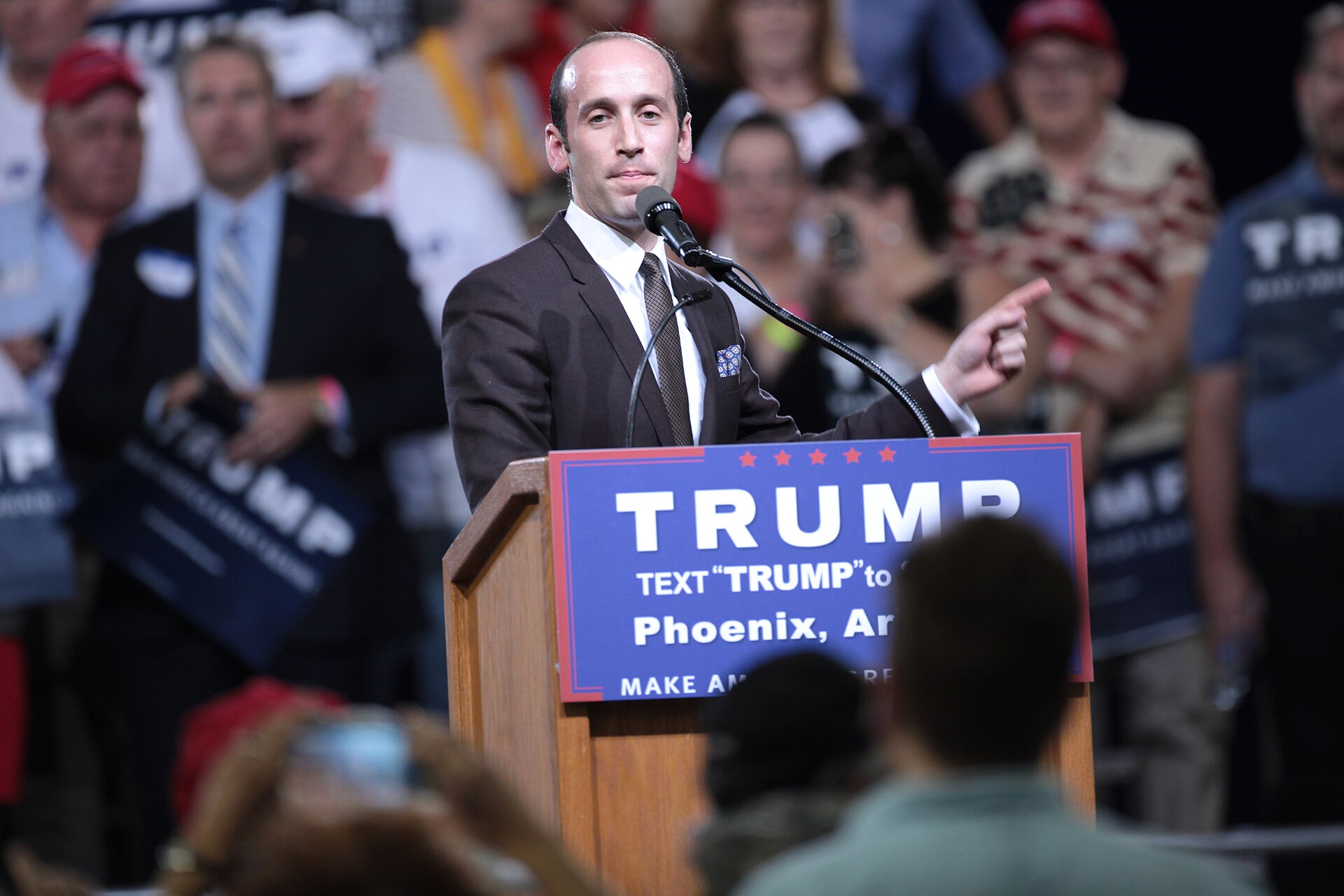
That is a sweeping ideological critique, not a narrowly targeted response to a single bill, election or court ruling. Miller was arguing about the motives and worldview he assigns to an entire political camp.
He also connected the argument to remarks by Rep. Alexandria Ocasio-Cortez, though the available account of the interview does not provide a full description of which specific comments prompted his response. That missing context matters when assessing how directly Miller was answering her position versus making a broader case against progressivism.
Policing became a key example
Miller pointed to debates over law enforcement and public safety as evidence for his case. He argued that efforts to defund police departments or significantly reform policing in major cities have harmed public safety.
He contrasted those arguments with administration initiatives in Washington, D.C., claiming credit for substantial declines in local violent crime. The account of the interview does not include the crime data, timeframe or specific policies underlying that claim, so it cannot by itself establish how much any one initiative affected crime rates.
The underlying debate is more complicated than the interview’s shorthand suggests. Calls to reform policing have varied widely, from changes in use-of-force rules and accountability systems to investments in crisis-response programs and, in some cases, reductions or shifts in police funding. Critics of reform measures often argue they weaken public safety; supporters argue effective reform can improve both accountability and community safety.
Miller’s framing collapses those differences into a single political message. For him, reforms that reduce the authority or resources of traditional institutions are evidence of a destructive impulse.
A broader case against progressivism
The interview ranged beyond policing. Miller said progressive candidates and groups oppose the administration’s priorities on border security, criminal justice and education, presenting those disagreements as part of the same ideological conflict.
His language placed the dispute at the level of national identity. Miller said that beneath what he called “woke labeling” is hostility toward America and toward the people who build and sustain its institutions.
That language reflects a familiar conservative argument: social stability depends on institutions such as law enforcement, borders, schools, families and civic traditions, and rapid efforts to remake those institutions carry serious costs. It is an argument designed to make policy disputes feel less technical and more existential.
Progressives, meanwhile, generally reject the premise that reform amounts to destruction. Their case is often that existing systems can preserve inequality or produce harmful outcomes, and that changing them is necessary to make democratic institutions work more fairly. The conflict is not simply over whether institutions matter, but over which institutions are serving the public well and what kind of change they require.
Why the builder-versus-destroyer frame works
Miller’s rhetoric is politically useful because it turns a long list of separate issues into a simple contrast. In this formulation, the America First movement protects what is valuable, while its opponents seek to dismantle it.
That kind of framing can be powerful because it does not require voters to follow every detail of a policing plan, immigration rule or education dispute. It asks them to make a judgment about the basic direction of the country and the intentions of competing political movements.
- On immigration: the argument emphasizes sovereignty, enforcement and national cohesion.
- On public safety: it elevates order and police capacity over reforms that Miller portrays as weakening enforcement.
- On education: it casts battles over curriculum and cultural values as fights over whether traditional institutions will be preserved.
- On government: it treats redistribution and structural reform as potential threats to achievement, property and stability.
Its weakness is that broad moral language can obscure practical distinctions. Not every progressive proposal seeks the same outcome, just as not every conservative policy preserves an institution in the same way. Specific proposals still need to be judged by their design, evidence and results.
America First as the counterpoint
Miller concluded by presenting the America First movement as an affirmative project: one aimed at defending traditional American institutions and values against progressive opposition. That is the constructive half of his message, even though the interview’s most memorable language focused on condemnation of the left.
The contrast is central to Miller’s role in the administration. His public arguments frequently link immigration enforcement, cultural issues, criminal justice and executive action to a single theory of national renewal rooted in borders, order and institutional continuity.
Whether voters see that as preservation or resistance to needed change will depend on the policies themselves, not just the language used to describe them. Miller’s comments make clear that the administration intends to argue those policy fights in civilizational terms.
What remains unanswered
The interview offered a forceful ideological diagnosis, but it did not lay out detailed measurements for its biggest claims. The available account does not specify which Washington initiatives Miller credits for changes in violent crime, how he defines the progressive movement at issue, or which reforms he believes should replace the policies he criticizes.
Those unanswered details are significant. A claim that an ideology “can’t build anything” is inherently broad, and it can only be tested by comparing concrete records: housing built or blocked, schools improved or weakened, crime trends, wages, health outcomes, immigration results and the performance of public institutions.
For now, Miller’s appearance is best understood as a clear statement of political positioning. He cast progressivism as a force of dismantling and the America First movement as a force of protection and rebuilding—an argument likely to remain at the center of the administration’s effort to define its opponents.
Leave a Reply